The Complete Waist-to-Hip Ratio (WHR) Calculator Guide: Understanding Your Health Through Body Shape
Introduction: Why Your Body Shape Matters More Than Your Weight
For decades, we've been told that weight and BMI are the ultimate health indicators. But medical research has revealed a more important metric: where you carry your fat, not just how much you have. Your waist-to-hip ratio (WHR) is a simple yet powerful tool that predicts health risks more accurately than BMI alone.
This comprehensive guide will teach you:
- Why WHR matters for heart disease, diabetes, and longevity
- How to measure your waist and hip correctly
- What your WHR number actually means
- How to improve your WHR and reduce health risks
- How to use our WHR calculator effectively
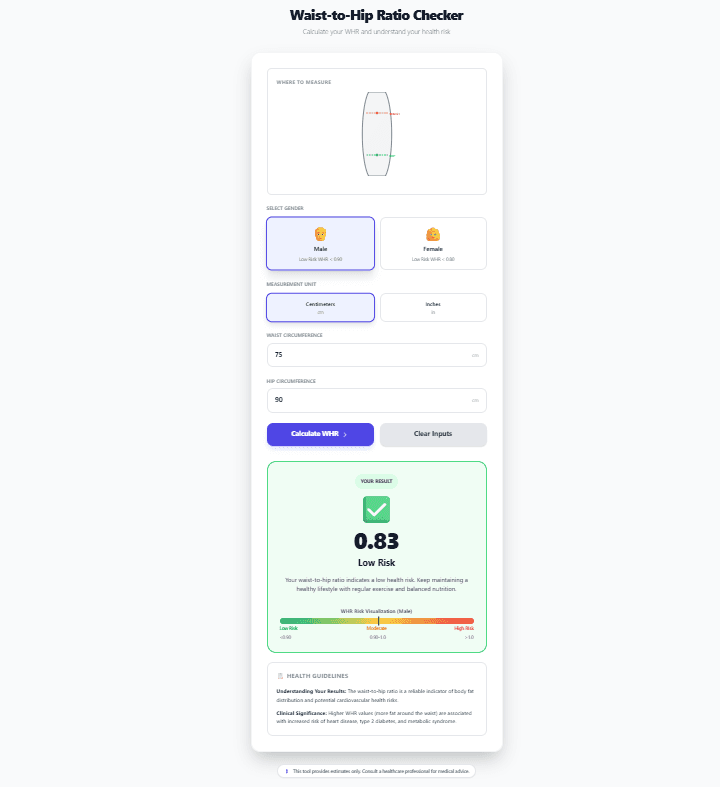
Ready to calculate your WHR? Use our Waist-to-Hip Ratio Calculator for instant health risk assessment.
📖 Table of Contents
- The Science Behind Waist-to-Hip Ratio
- Why WHR Beats BMI for Health Prediction
- How to Measure Correctly: Common Mistakes
- WHR Calculation: The Simple Formula
- Health Risk Categories by Gender
- Understanding Your Results: Low, Moderate, High Risk
- Apple vs. Pear Body Shapes Explained
- Health Risks Associated with High WHR
- Genetic and Hormonal Factors in Fat Distribution
- Age and WHR: What Changes to Expect
- Ethnic Differences in WHR Standards
- Improving Your WHR: Effective Strategies
- Diet Strategies for Reducing Abdominal Fat
- Exercise Programs for Waist Reduction
- When to Seek Medical Advice
- WHR vs. Other Health Metrics
- Tracking Progress with WHR
- FAQs: Your WHR Questions Answered
1️⃣ The Science Behind Waist-to-Hip Ratio
What Is Waist-to-Hip Ratio?
WHR is a simple calculation:
WHR = Waist Circumference ÷ Hip Circumference
This ratio measures your body fat distribution—specifically, how much fat you carry around your abdomen compared to your hips and thighs.
Historical Context
The importance of body fat distribution has been recognized for centuries:
- Ancient medicine: Hippocrates noted abdominal obesity health risks
- 1940s: French physician Jean Vague identified android (apple) and gynoid (pear) fat patterns
- 1980s: Modern research established WHR as cardiovascular risk predictor
- Today: WHO recognizes WHR as key metabolic syndrome criterion
The Biology of Fat Distribution
Two main fat types:
- Subcutaneous fat: Under the skin, relatively harmless
- Visceral fat: Around organs, metabolically active and dangerous
Why visceral fat matters:
- Releases inflammatory cytokines
- Increases insulin resistance
- Raises blood pressure
- Disrupts hormone balance
- Directly linked to heart disease
Why Ratio Matters More Than Individual Measurements
A person with:
- Waist 80cm, Hips 100cm: WHR = 0.80 (healthy)
- Waist 80cm, Hips 80cm: WHR = 1.00 (high risk)
Same waist measurement, completely different health implications!
2️⃣ Why WHR Beats BMI for Health Prediction
Limitations of BMI
BMI (Body Mass Index) fails to account for:
- Muscle mass: Athletes with high muscle may have "obese" BMI
- Fat distribution: Where fat is located
- Body composition: Fat vs. muscle percentage
- Bone density: Heavier bones affect calculation
- Age-related changes: Muscle loss with aging
WHR Advantages
WHR captures what BMI misses:
- Fat distribution pattern
- Visceral fat accumulation
- Metabolic risk profile
- Cardiovascular disease likelihood
- Type 2 diabetes risk
Comparative Studies
Research findings:
- Nurses' Health Study: WHR predicted heart attacks better than BMI
- INTERHEART study: WHR accounted for more heart attacks than any other risk factor
- Framingham Heart Study: High WHR linked to early mortality regardless of BMI
When to Use Each Metric
BMI is useful for:
- Population-level studies
- General weight categories
- Insurance risk assessment
WHR is essential for:
- Individual health risk assessment
- Metabolic syndrome diagnosis
- Cardiovascular risk prediction
- Weight loss program effectiveness
Combined Approach
For best health assessment:
- Measure BMI for weight classification
- Calculate WHR for risk assessment
- Consider body composition (muscle/fat percentage)
- Assess lifestyle factors
3️⃣ How to Measure Correctly: Common Mistakes
Proper Waist Measurement
Where to measure:
- Midpoint between bottom of ribs and top of hip bone
- Natural waist (narrowest point above belly button)
- Parallel to floor
How to measure:
- Stand straight, feet together
- Breathe out normally
- Place tape snug but not compressing skin
- Keep tape parallel to floor
- Take measurement at end of normal breath
Common waist measurement errors:
- ✅ Correct: At natural waistline
- ❌ Wrong: At belly button (usually too low)
- ❌ Wrong: Above belly button (usually too high)
- ❌ Wrong: Over clothing
- ❌ Wrong: While sucking in stomach
Proper Hip Measurement
Where to measure:
- Widest part of buttocks/hips
- Maximum protrusion
- Include both hip bones
How to measure:
- Stand with feet together
- Place tape around widest part
- Ensure tape is level all around
- Snug but not compressing
- Measure over minimal clothing
Common hip measurement errors:
- ✅ Correct: Widest point including buttocks
- ❌ Wrong: Around hip bones only
- ❌ Wrong: Too high or too low
- ❌ Wrong: Over bulky clothing
- ❌ Wrong: While standing unevenly
Measurement Tools
Best options:
- Flexible measuring tape: Most accurate
- Body measurement tape: Specialized for bodies
- Digital tape measures: Convenient but ensure accuracy
Avoid:
- String and ruler (inaccurate)
- Stiff construction tapes
- Estimates by eye
When to Measure
For consistency:
- Same time of day (morning best)
- Same conditions (before eating, after bathroom)
- Same clothing (underwear or light clothing)
- Monthly tracking for progress
Factors affecting measurements:
- Time of day: Evening measurements larger
- Menstrual cycle: Women's measurements fluctuate
- Recent meals: Bloating affects waist
- Exercise timing: Post-workout measurements differ
4️⃣ WHR Calculation: The Simple Formula
The Basic Formula
WHR = Waist Circumference ÷ Hip Circumference
Example calculation:
- Waist: 85 cm
- Hips: 105 cm
- WHR: 85 ÷ 105 = 0.81
Unit Considerations
Our calculator handles:
- Centimeters (cm): International standard
- Inches: Common in US
Conversion:
1 inch = 2.54 cm
1 cm = 0.3937 inches
Important: Use same units for both measurements!
Automatic Calculation Benefits
Our calculator:
- Ensures accurate division
- Handles decimal precision
- Converts units automatically
- Applies gender-specific thresholds
- Provides instant risk categorization
Manual Calculation Tips
If calculating manually:
- Use exact measurements (no rounding until final)
- Calculate to 2 decimal places
- Double-check division
- Compare to gender thresholds
5️⃣ Health Risk Categories by Gender
Gender Differences Explained
Why different thresholds?
- Biological differences: Hormones affect fat distribution
- Reproductive needs: Women naturally store more hip/thigh fat
- Evolutionary adaptation: Different energy storage patterns
- Muscle distribution: Men typically have broader shoulders
Male WHR Standards
| WHR Range | Risk Category | Health Implications |
|---|---|---|
| < 0.90 | Low Risk | Normal fat distribution |
| 0.90 - 0.99 | Moderate Risk | Increased health risk |
| ≥ 1.00 | High Risk | Significant health concerns |
Female WHR Standards
| WHR Range | Risk Category | Health Implications |
|---|---|---|
| < 0.80 | Low Risk | Normal fat distribution |
| 0.80 - 0.85 | Moderate Risk | Increased health risk |
| > 0.85 | High Risk | Significant health concerns |
World Health Organization Standards
WHO defines abdominal obesity as:
- Men: WHR > 0.90
- Women: WHR > 0.85
These thresholds are based on extensive epidemiological research.
Why Thresholds Aren't Absolute
Consider these factors:
- Age: Older adults may have different risk profiles
- Ethnicity: Some populations have different optimal ranges
- Fitness level: Athletic individuals may have exceptions
- Overall health: Consider other risk factors
Thresholds are guidelines, not absolute rules.
6️⃣ Understanding Your Results: Low, Moderate, High Risk
Low Risk (Green Zone)
Characteristics:
- WHR < 0.90 (men) or < 0.80 (women)
- Pear-shaped or balanced fat distribution
- Lower visceral fat accumulation
Health implications:
- ✅ Lower cardiovascular disease risk
- ✅ Reduced diabetes risk
- ✅ Better metabolic profile
- ✅ Generally healthier aging
Action steps:
- Maintain healthy lifestyle
- Regular monitoring (annual check)
- Preventative health measures
- Continue balanced diet and exercise
Moderate Risk (Yellow Zone)
Characteristics:
- WHR 0.90-0.99 (men) or 0.80-0.85 (women)
- Transitioning toward apple shape
- Moderate abdominal fat accumulation
Health implications:
- ⚠️ Increased health risks
- ⚠️ Higher metabolic syndrome likelihood
- ⚠️ Growing cardiovascular concern
Action steps:
- Implement lifestyle changes
- Focus on abdominal fat reduction
- Increase physical activity
- Improve dietary habits
- Consider medical consultation
- Monitor every 3-6 months
High Risk (Red Zone)
Characteristics:
- WHR ≥ 1.00 (men) or > 0.85 (women)
- Apple-shaped body
- Significant visceral fat
Health implications:
- 🚨 High cardiovascular disease risk
- 🚨 Increased diabetes likelihood
- 🚨 Elevated blood pressure concerns
- 🚨 Higher mortality risk
Action steps:
- Consult healthcare provider
- Comprehensive health assessment
- Structured weight loss program
- Medical monitoring
- Immediate lifestyle changes
- Regular follow-up measurements
Beyond the Numbers
Also consider:
- Family history of related diseases
- Other risk factors (smoking, cholesterol)
- Overall fitness level
- Diet quality
- Stress levels and sleep quality
Your WHR is one piece of your health puzzle.
7️⃣ Apple vs. Pear Body Shapes Explained
Apple Shape (Android Obesity)
Characteristics:
- Fat concentrated around abdomen
- Wider waist than hips
- WHR > 0.90 (men) or > 0.85 (women)
- Often described as "pot belly" or "beer belly"
Health risks:
- Higher visceral fat
- Increased heart disease risk
- Greater diabetes likelihood
- More metabolic complications
Common in:
- Men (especially after 40)
- Postmenopausal women
- Individuals with high stress
- Those with poor diet/exercise habits
Pear Shape (Gynoid Obesity)
Characteristics:
- Fat concentrated around hips and thighs
- Wider hips than waist
- WHR < 0.90 (men) or < 0.80 (women)
- Often described as "curvy" or "hourglass"
Health risks:
- Lower cardiovascular risk
- Fewer metabolic complications
- May have cosmetic concerns
- Possible joint issues from weight
Common in:
- Women of reproductive age
- Certain ethnic groups
- Individuals with estrogen dominance
Hourglass Shape
Characteristics:
- Balanced fat distribution
- Well-defined waist
- Hips and bust similar proportions
- WHR typically in healthy range
Health implications:
- Generally lowest health risks
- Balanced hormone profile
- Often associated with fertility
Determining Your Shape
Simple test:
- Calculate WHR using our calculator
- Compare waist and hip measurements
- Look in mirror at fat distribution
- Consider clothing fit patterns
Remember: Body shape can change with:
- Weight gain/loss
- Aging
- Hormonal changes
- Pregnancy
- Lifestyle modifications
8️⃣ Health Risks Associated with High WHR
Cardiovascular Disease
Mechanisms:
- Visceral fat inflammation affects blood vessels
- Increased blood pressure from abdominal pressure
- Altered lipid profiles (higher triglycerides)
- Insulin resistance leading to metabolic syndrome
Statistics:
- WHR > 0.90 increases heart attack risk 3×
- Each 0.01 increase in WHR raises cardiovascular risk 5%
- WHR predicts heart disease better than BMI
Type 2 Diabetes
Connection to WHR:
- Abdominal fat produces inflammatory cytokines
- Increased insulin resistance
- Liver fat accumulation impairs glucose processing
- Pancreatic stress from constant insulin production
Research findings:
- High WHR individuals have 10× diabetes risk
- WHR reduction improves insulin sensitivity
- Abdominal fat loss reduces diabetes progression
Metabolic Syndrome
WHO definition includes:
- Abdominal obesity (high WHR or waist circumference)
- High triglycerides
- Low HDL cholesterol
- High blood pressure
- Elevated fasting glucose
Having 3+ criteria indicates metabolic syndrome.
Certain Cancers
Linked to high WHR:
- Colorectal cancer: 50% higher risk
- Breast cancer: Postmenopausal women
- Endometrial cancer: Strong association
- Pancreatic cancer: Increased risk
Mechanism: Fat tissue produces hormones and growth factors.
Other Health Issues
Also associated with high WHR:
- Sleep apnea: Abdominal fat affects breathing
- Fatty liver disease: Direct connection
- Gallbladder disease: Higher incidence
- Osteoarthritis: Weight on joints
- Fertility issues: Hormonal disruptions
- Depression: Bidirectional relationship
Mortality Risk
Key studies show:
- WHR predicts mortality better than BMI
- Each 0.1 unit increase raises mortality risk 20-30%
- High WHR reduces life expectancy by 5-10 years
9️⃣ Genetic and Hormonal Factors in Fat Distribution
Genetic Influence
Heritability estimates:
- Waist circumference: 40-60% heritable
- Hip circumference: 60-70% heritable
- WHR: 30-50% heritable
Key genes identified:
- FTO gene: Affects overall obesity
- IRS1 gene: Influences fat distribution
- THADA gene: Affects waist-to-hip ratio
- GRB14 gene: Impacts insulin signaling and fat storage
What genetics determines:
- Where you store fat
- How easily you store abdominal fat
- Response to diet/exercise
- Baseline body shape tendencies
Hormonal Factors
Estrogen:
- Promotes pear-shaped fat distribution
- Protects against abdominal fat accumulation
- Declines after menopause (increased apple shape)
Testosterone:
- Promotes abdominal fat storage in excess
- Low testosterone also linked to abdominal fat
- Complex relationship with fat distribution
Cortisol (stress hormone):
- Directly promotes abdominal fat storage
- Explains "stress belly" phenomenon
- Connects psychological stress to physical health
Insulin:
- High levels promote fat storage, especially abdominal
- Insulin resistance worsens fat distribution
Age-Related Changes
Men:
- Gradual increase in WHR with age
- Testosterone decline contributes
- Lifestyle factors accumulate
Women:
- Dramatic shift at menopause
- WHR increases significantly
- Increased cardiovascular risk
Both genders:
- Muscle loss with age
- Metabolic slowdown
- Activity level decrease
What You Can Control
Despite genetic predispositions:
- Lifestyle significantly influences WHR
- Diet quality affects fat distribution
- Exercise type targets abdominal fat
- Stress management reduces cortisol impact
- Sleep quality affects hormone balance
Genetics loads the gun, lifestyle pulls the trigger.
🔟 Age and WHR: What Changes to Expect
Childhood and Adolescence
Normal patterns:
- Children: Lower WHR naturally
- Puberty: Gender differences emerge
- Teens: Establishing adult patterns
Concerns:
- Early high WHR predicts adult metabolic issues
- Childhood obesity often continues into adulthood
- Early intervention most effective
Young Adulthood (20-39)
Typical changes:
- 20s: Metabolism peaks, WHR stable if active
- 30s: Gradual WHR increase begins
- Lifestyle choices become apparent
Prevention focus:
- Establish healthy habits
- Maintain physical activity
- Prevent gradual weight creep
Middle Age (40-59)
Critical period:
- 40s: Metabolic slowdown accelerates
- 50s: Hormonal changes significant
- WHR increases most rapidly
Health implications:
- Cardiovascular risk rises sharply
- Diabetes incidence increases
- Lifestyle interventions crucial
Menopause Transition (Women)
What happens:
- Estrogen decline dramatic
- Fat redistribution to abdomen
- WHR increases 0.05-0.10 units
- Metabolic risk escalates
Management strategies:
- Hormone therapy considerations
- Increased exercise emphasis
- Dietary adjustments
- Regular monitoring
Older Adulthood (60+)
Age-related changes:
- Further WHR increase
- Muscle loss exacerbates issues
- Activity limitations may develop
Health priorities:
- Maintain mobility and function
- Prevent further fat accumulation
- Manage chronic conditions
- Quality of life focus
Lifespan Perspective
Ideal trajectory:
- Maintain WHR in healthy range
- Minimize age-related increase
- Address changes promptly
- Regular monitoring throughout life
Key principle: It's never too early or too late to improve your WHR.
1️⃣1️⃣ Ethnic Differences in WHR Standards
Why Ethnicity Matters
Different populations have:
- Varying genetic predispositions
- Distinct body composition patterns
- Different disease risk thresholds
- Cultural lifestyle influences
WHO Ethnic-Specific Guidelines
Increased risk thresholds:
| Population | Men | Women |
|---|---|---|
| European | ≥0.90 | ≥0.85 |
| South Asian | ≥0.90 | ≥0.85 |
| Chinese | ≥0.90 | ≥0.85 |
| Japanese | ≥0.90 | ≥0.85 |
| Ethnic South & Central Americans | ≥0.90 | ≥0.85 |
| Sub-Saharan African | ≥0.90 | ≥0.85 |
| Middle Eastern & Mediterranean | ≥0.90 | ≥0.85 |
Note: Current research suggests some populations may need different thresholds.
South Asian Populations
Unique characteristics:
- Higher visceral fat at lower BMI
- Increased diabetes risk at lower WHR
- Some experts recommend lower thresholds
Proposed adjusted thresholds:
- Men: ≥0.85 (instead of 0.90)
- Women: ≥0.80 (instead of 0.85)
East Asian Populations
Patterns observed:
- Higher abdominal fat at lower BMI
- Increased metabolic risk
- Similar to South Asian pattern
African Ancestry Populations
Distinct features:
- Often higher muscle mass
- Different fat distribution patterns
- May have protective factors
Practical Implications
For individuals:
- Know your ethnic background
- Consider family health history
- Use standard thresholds as starting point
- Consult healthcare provider for personalized assessment
For healthcare providers:
- Consider ethnicity in risk assessment
- Use appropriate reference data
- Individualize recommendations
Our Calculator's Approach
Our calculator uses standard WHO thresholds because:
- Most researched and validated
- Applicable to diverse populations
- Conservative approach to risk assessment
- Can be adjusted based on individual factors
Always consult healthcare provider for personalized assessment.
1️⃣2️⃣ Improving Your WHR: Effective Strategies
Understanding WHR Improvement
To lower your WHR, you need to:
- Reduce waist circumference (lose abdominal fat)
- Maintain or increase hip measurement (preserve muscle)
- Or both
Important: Losing weight randomly may not improve WHR if you lose hip muscle along with fat.
Targeted Abdominal Fat Reduction
Why spot reduction doesn't work:
- You can't target fat loss from specific areas
- Body decides where to take fat from
- Genetics determines fat loss pattern
What works:
- Overall fat loss
- Visceral fat responds well to exercise
- Abdominal exercises strengthen muscles but don't remove fat
Comprehensive Approach
Four pillars of WHR improvement:
- Nutrition: Calorie control + quality foods
- Exercise: Cardio + strength training
- Stress management: Cortisol control
- Sleep optimization: Hormone balance
Realistic Expectations
Typical improvement rates:
- Initial 3 months: WHR reduction 0.05-0.10
- 6-12 months: Further 0.05-0.10 reduction
- Maintenance: Stabilize at healthier level
What's achievable:
- Moving down one risk category in 6-12 months
- Significant health risk reduction
- Improved metabolic markers
Monitoring Progress
Measure monthly:
- Waist circumference
- Hip circumference
- Calculate WHR
- Note how clothes fit
- Track energy levels
Avoid daily measurements (normal fluctuations cause frustration).
1️⃣3️⃣ Diet Strategies for Reducing Abdominal Fat
Calorie Balance Fundamentals
To lose abdominal fat:
Calories In < Calories Out
Moderate deficit recommended:
- 300-500 calories below maintenance
- Too aggressive causes muscle loss
- Sustainable rate: 0.5-1kg (1-2lbs) weekly
Macronutrient Focus
Protein (25-30% of calories):
- Preserves muscle during weight loss
- Increases satiety
- Higher thermic effect of food
- Sources: lean meats, fish, eggs, legumes
Fiber (25-35g daily):
- Reduces abdominal fat specifically
- Improves insulin sensitivity
- Sources: vegetables, fruits, whole grains, legumes
Healthy fats (20-30% of calories):
- Anti-inflammatory effects
- Hormone production
- Sources: avocados, nuts, seeds, olive oil
Specific Food Recommendations
Include more:
- Leafy greens: Low calorie, high nutrient
- Berries: Antioxidants, lower glycemic impact
- Fatty fish: Omega-3s reduce inflammation
- Whole eggs: Complete protein, nutrients
- Legumes: Fiber, protein, stable energy
- Green tea: May aid fat oxidation
- Apple cider vinegar: May reduce belly fat
Limit or avoid:
- Added sugars: Directly promotes abdominal fat
- Refined grains: Spikes insulin
- Trans fats: Increases visceral fat
- Excessive alcohol: "Beer belly" contributor
- Processed foods: Often high in problematic ingredients
Meal Timing Strategies
Intermittent fasting benefits:
- May specifically reduce visceral fat
- Improves insulin sensitivity
- Simplifies calorie control
Options:
- 16:8 (16-hour fast, 8-hour eating window)
- 14:10 (more moderate)
- Choose based on lifestyle
Important: Quality still matters during eating window.
Hydration Importance
Water aids weight loss by:
- Increasing metabolism temporarily
- Reducing liquid calorie intake
- Improving exercise performance
- Supporting digestion
Goal: 2-3 liters daily, more if active.
Practical Implementation
Start with one change:
- Week 1: Eliminate sugary drinks
- Week 2: Add vegetable to each meal
- Week 3: Increase protein at breakfast
- Week 4: Practice mindful eating
Build habits gradually for sustainable change.
1️⃣4️⃣ Exercise Programs for Waist Reduction
Exercise Hierarchy for WHR Improvement
Most effective → Least effective:
- High-Intensity Interval Training (HIIT)
- Strength training (full body)
- Moderate cardio (steady state)
- Core strengthening
- Low-intensity activity
High-Intensity Interval Training (HIIT)
Why effective:
- Burns calories during and after (EPOC)
- Particularly targets visceral fat
- Time efficient
- Improves insulin sensitivity
Sample routine:
- Warm-up: 5 minutes light cardio
- Intervals: 30 seconds high intensity, 60 seconds recovery
- Repeat 8-10 times
- Cool-down: 5 minutes light activity
- Total: ~25 minutes
Frequency: 2-3 times weekly
Strength Training
Benefits for WHR:
- Builds muscle (improves hip measurement)
- Increases metabolic rate
- Improves body composition
- Supports fat loss
Key exercises:
- Squats: Works hips/glutes
- Deadlifts: Full body, emphasizes posterior chain
- Overhead press: Shoulders, core
- Rows: Back, posture
- Lunges: Legs, balance
Frequency: 2-3 times weekly
Moderate Cardio
Steady-state benefits:
- Burns calories
- Improves cardiovascular health
- Sustainable for longer durations
- Low injury risk
Options:
- Brisk walking: 45-60 minutes
- Cycling: 30-45 minutes
- Swimming: 30-45 minutes
- Dancing: 30-60 minutes
Frequency: 3-5 times weekly
Core Strengthening
Important but misunderstood:
- Doesn't spot reduce abdominal fat
- Strengthens muscles underneath
- Improves posture (makes waist appear smaller)
- Supports other exercises
Effective exercises:
- Planks: Full core engagement
- Bird-dogs: Stability, coordination
- Dead bugs: Core control
- Pallof press: Anti-rotation
Avoid: Excessive crunches (can thicken waist).
NEAT (Non-Exercise Activity Thermogenesis)
Daily movement matters:
- Walking more steps
- Taking stairs
- Standing vs sitting
- Household chores
- Fidgeting
Can account for 15-30% of daily calories!
Creating Your Program
Sample weekly schedule:
- Monday: Strength training
- Tuesday: HIIT
- Wednesday: Active recovery (walking)
- Thursday: Strength training
- Friday: HIIT
- Saturday: Longer cardio session
- Sunday: Rest or light activity
Adjust based on:
- Fitness level
- Time availability
- Preferences
- Progress
Consistency Over Intensity
Better to:
- Exercise moderately 5× weekly
- Than intensely 1× weekly and quit
Find activities you enjoy for sustainability.
1️⃣5️⃣ When to Seek Medical Advice
Red Flags Requiring Medical Consultation
Seek immediate advice if:
- WHR > 1.0 (men) or > 0.90 (women)
- Rapid waist increase without weight gain elsewhere
- Accompanying symptoms: fatigue, shortness of breath
- Family history of early heart disease/diabetes
- Existing health conditions (hypertension, high cholesterol)
Professional Assessment Components
Your provider may:
- Verify measurements and calculations
- Assess overall risk factors
- Order tests: cholesterol, glucose, liver function
- Evaluate for metabolic syndrome
- Consider imaging for visceral fat assessment
Medical Interventions
When lifestyle isn't enough:
- Medications for underlying conditions
- Weight loss medications (if qualified)
- Referral to specialists (endocrinology, cardiology)
- Structured programs (supervised weight loss)
Bariatric Surgery Considerations
May be considered for:
- Morbid obesity with high WHR
- Failed conservative treatments
- Serious health complications
- Qualifying BMI and health status
Consult obesity medicine specialist.
Regular Screening Recommendations
Based on WHR category:
- Low risk: Annual check-up
- Moderate risk: 6-month monitoring
- High risk: 3-month follow-up or as directed
Include in screening:
- Blood pressure
- Blood lipids
- Fasting glucose
- Liver enzymes
Partnering with Your Healthcare Team
Effective partnership requires:
- Honesty about habits and challenges
- Commitment to recommended changes
- Regular follow-up appointments
- Open communication about concerns
- Shared decision-making
1️⃣6️⃣ WHR vs. Other Health Metrics
WHR vs. Waist Circumference Alone
Waist circumference advantages:
- Simpler to measure
- Single measurement
- Good population screening
WHR advantages:
- Accounts for body frame
- More personalized
- Better predictor for some outcomes
Best practice: Measure both.
WHR vs. Waist-to-Height Ratio
Waist-to-height ratio formula:
WHtR = Waist ÷ Height
Healthy threshold: < 0.50
Comparison:
- WHtR: Accounts for height, simple threshold
- WHR: Accounts for body shape, gender-specific
- Both useful, slightly different information
WHR vs. Body Fat Percentage
Body fat percentage:
- Measures total fat
- Requires special equipment
- Doesn't indicate distribution
Combination approach:
- Body fat %: How much fat
- WHR: Where fat is located
- Together: Complete picture
WHR vs. Skin Fold Measurements
Skin fold calipers:
- Estimate subcutaneous fat
- Multiple site measurements
- Technician skill dependent
WHR complements by indicating visceral fat.
Comprehensive Health Assessment
Ideal metrics combination:
- Weight and BMI: General classification
- WHR or waist circumference: Fat distribution
- Body composition: Muscle/fat ratio
- Blood markers: Metabolic health
- Fitness measures: Functional capacity
No single metric tells the whole story.
1️⃣7️⃣ Tracking Progress with WHR
Measurement Frequency
Recommended schedule:
- Active improvement phase: Monthly
- Maintenance phase: Every 3 months
- After significant life changes: Remeasure
- Not recommended: Weekly (normal fluctuations)
Tracking Methods
Simple tracking:
- Notebook or journal
- Notes app on phone
- Calendar notations
Digital tracking:
- Spreadsheet (Excel/Google Sheets)
- Health apps with measurement features
- Photo documentation (clothing fit)
Our recommendation:
- Record date, waist, hip, WHR
- Note any relevant factors (stress, menstrual cycle)
- Track how clothes fit
- Monitor energy levels
Setting Realistic Goals
SMART goals for WHR:
- Specific: Reduce WHR from 0.95 to 0.88
- Measurable: Monthly measurements
- Achievable: 0.07 reduction in 6 months
- Relevant: Lower cardiovascular risk
- Time-bound: 6-month target
Process goals alongside outcome goals:
- Exercise 4× weekly
- Eat vegetables with each meal
- Walk 8,000 steps daily
- Practice stress management daily
Plateaus and Adjustments
Normal plateau causes:
- Metabolic adaptation
- Reduced adherence
- Need for program change
- Non-scale victories occurring
Adjustment strategies:
- Recalculate calories (weight loss reduces needs)
- Change exercise routine (shock the system)
- Increase NEAT (more daily movement)
- Review food intake (hidden calories)
- Address stress/sleep (hormonal factors)
Non-Scale Victories
Also track:
- Clothing fit improvements
- Energy level increases
- Exercise performance gains
- Blood marker improvements
- Better sleep quality
- Reduced medication needs
- Improved mood
These matter as much as WHR numbers!
Long-Term Maintenance
Successful maintainers:
- Continue monitoring (less frequently)
- Maintain key habits
- Have plan for setbacks
- Accept natural fluctuations
- Focus on health, not just numbers
Maintenance is a lifelong practice.
❓ Frequently Asked Questions
Q: How accurate is the WHR calculator? A: Our calculator provides accurate WHR calculations based on your measurements. Accuracy depends on proper measurement technique. When measured correctly, WHR is a reliable health indicator with strong scientific backing.
Q: What's a healthy WHR for my age? A: Healthy WHR standards don't change significantly with age, but what's achievable might. The same thresholds apply (men <0.90, women <0.80), though maintaining these becomes more challenging with age due to metabolic and hormonal changes.
Q: Can I improve my WHR without losing weight? A: Yes, through body recomposition: losing abdominal fat while building or maintaining hip/thigh muscle. This requires strength training alongside cardio and proper nutrition with adequate protein.
Q: How quickly can I improve my WHR? A: With consistent effort, you can typically reduce WHR by 0.05-0.10 in 3 months. Moving from high to moderate risk category often takes 6-12 months of sustained lifestyle changes.
Q: Why are there different standards for men and women? A: Biological differences in fat distribution due to hormones and reproductive needs. Women naturally store more fat in hips/thighs (pear shape), while men tend toward abdominal storage (apple shape).
Q: Is WHR or BMI more important? A: Both provide valuable information. WHR better predicts cardiovascular risk, while BMI indicates overall weight status. For complete assessment, consider both along with other health markers.
Q: Can skinny people have high WHR? A: Yes, "skinny fat" or normal-weight obesity occurs when someone has normal BMI but high body fat percentage and unfavorable fat distribution. They can have high WHR and associated health risks.
Q: How does menopause affect WHR? A: Menopause typically increases WHR by 0.05-0.10 as fat redistributes from hips/thighs to abdomen due to estrogen decline. This increases cardiovascular risk, making lifestyle factors even more important.
Q: Should children calculate WHR? A: WHR has less predictive value in children. Pediatricians typically use BMI-for-age percentiles. However, extremely high WHR in children may warrant discussion with a pediatrician.
Q: Can exercise make my WHR worse? A: Certain exercises can build abdominal muscles, potentially increasing waist measurement. However, this muscle is beneficial and different from visceral fat. Focus on overall health rather than just the number.
🚀 Start Your WHR Journey Today
Your Action Plan
Week 1: Assessment
- Measure waist and hip correctly
- Calculate WHR using our calculator
- Understand your risk category
- Set initial goals
Month 1-3: Implementation
- Start one dietary improvement
- Begin consistent exercise routine
- Practice stress management
- Track monthly measurements
Month 4-6: Optimization
- Adjust based on progress
- Add new healthy habits
- Monitor improvements
- Celebrate successes
Month 7+: Maintenance
- Establish sustainable routine
- Continue quarterly monitoring
- Adjust for life changes
- Focus on overall health
Tools for Success
- WHR Calculator: Your assessment tool
- Flexible measuring tape: Accurate measurements
- Tracking method: Journal, app, or spreadsheet
- Support system: Healthcare provider, family, or community
Key Principles to Remember
- Consistency beats perfection – Regular healthy habits matter most
- Progress, not perfection – Small improvements reduce risk
- Health is holistic – WHR is one important piece
- It's never too late – Improvements benefit at any age
- Knowledge is power – Understanding your body enables better choices
📏 Ready to Understand Your Body Better?
You now understand:
- Why WHR matters for long-term health
- How to measure and calculate accurately
- What your WHR results mean
- Strategies to improve your ratio
- When to seek professional guidance
Take the first step today:
- Calculate your WHR now
- Measure correctly using our guidelines
- Set one small health goal for this week
- Schedule a check-in with yourself in one month
Remember: Your body shape tells an important story about your health. By understanding and improving your WHR, you're taking proactive steps toward reducing disease risk and enhancing longevity.
To your health! 🍎→🍐
Disclaimer: This calculator provides estimates for educational purposes. It is not a substitute for professional medical advice, diagnosis, or treatment. Individual health assessments should be conducted by qualified healthcare professionals. Always consult with your doctor before making health changes.