The Complete Water Intake Calculator Guide: Hydrate Smart for Optimal Health
Introduction: Why Proper Hydration is More Than Just Drinking Water
Water is the foundation of life, yet most people don't drink enough—or drink too much at the wrong times. Dehydration affects cognitive function, physical performance, mood, and even weight management. But how much water do you actually need? The answer isn't "8 glasses a day" for everyone.
This comprehensive guide will teach you:
- How to calculate your personalized water needs
- Why weight, activity, and climate affect hydration
- When to drink water for maximum benefit
- Signs of both dehydration and overhydration
- How to use our Water Intake Calculator effectively
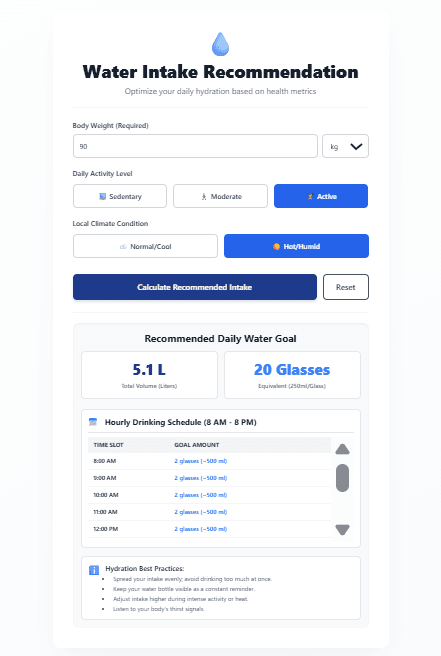
Ready to calculate your water needs? Use our Water Intake Calculator for personalized recommendations and hourly drinking schedules.
📖 Table of Contents
- The Science of Hydration: More Than Just Thirst
- Why "8 Glasses a Day" is a Myth
- How Our Water Intake Calculator Works
- Weight-Based Hydration Calculations
- Activity Level: Sedentary, Moderate, or Active
- Climate Impact: Normal vs. Hot/Humid Conditions
- Age and Hydration Needs
- Pregnancy and Breastfeeding Considerations
- Medical Conditions Affecting Hydration
- The Hourly Drinking Schedule Explained
- Signs of Proper Hydration
- Symptoms of Dehydration and Overhydration
- Best Times to Drink Water
- Water Quality and Source Considerations
- Hydration and Weight Loss Connection
- Electrolyte Balance: Beyond Plain Water
- Tracking Your Hydration Progress
- Special Populations and Adjustments
- Common Hydration Mistakes
- FAQs: Your Water Intake Questions Answered
1️⃣ The Science of Hydration: More Than Just Thirst
Water's Vital Functions
Water constitutes about 60% of your body weight and is essential for:
- Temperature regulation: Through sweating and respiration
- Nutrient transport: Delivering nutrients to cells
- Waste removal: Through urine and sweat
- Joint lubrication: Cushioning joints and tissues
- Digestive processes: Breaking down food
- Cognitive function: Brain is 75% water
- Physical performance: Muscle function and endurance
The Thirst Mechanism
Thirst signals:
- Activated when body loses 1-2% of water
- Can be unreliable, especially in older adults
- Often confused with hunger
- Delayed response to actual need
Why waiting for thirst is problematic:
- You're already mildly dehydrated when thirsty
- Cognitive impairment begins at 1-2% dehydration
- Physical performance decreases at 2% dehydration
Daily Water Turnover
Average daily water loss:
- Urine: 1-2 liters
- Sweat: 0.5-1 liter (more with activity)
- Breathing: 0.25-0.5 liter
- Feces: 0.1-0.2 liter
Total: 1.85-3.7 liters daily must be replaced
2️⃣ Why "8 Glasses a Day" is a Myth
Origins of the 8×8 Rule
The "drink eight 8-ounce glasses of water daily" recommendation:
- Origin: 1945 Food and Nutrition Board recommendation
- Misinterpretation: Included water from all sources (food, beverages)
- Lack of evidence: No scientific studies support this specific amount
- One-size-fits-all: Doesn't account for individual differences
Problems with Fixed Recommendations
8 glasses (1.9 liters) may be:
- Too much for small, sedentary individuals
- Too little for large, active people in hot climates
- Irrelevant for those getting water from food and other beverages
Scientific Approach
Evidence-based recommendations consider:
- Body weight: Larger bodies need more water
- Activity level: Exercise increases water loss
- Climate: Heat and humidity increase needs
- Health status: Illness, pregnancy, medications affect requirements
- Diet: Water content in foods varies
Our calculator addresses all these factors for personalized recommendations.
3️⃣ How Our Water Intake Calculator Works
Calculation Formula
Our calculator uses this comprehensive formula:
Base Water (ml) = Weight in kg × 33
Adjusted Water = Base Water × Activity Multiplier × Climate Multiplier
Step-by-Step Calculation
Step 1: Weight Conversion
- kg → kg (no change)
- lbs → kg (multiply by 0.453592)
Step 2: Base Calculation
- 33 ml per kg body weight (established hydration guideline)
Step 3: Activity Adjustment
- Sedentary: ×1.0
- Moderate: ×1.2
- Active: ×1.5
Step 4: Climate Adjustment
- Normal: ×1.0
- Hot/Humid: ×1.15
Step 5: Final Conversion
- Milliliters to liters (÷1000)
- Milliliters to glasses (÷250, standard glass size)
Example Calculation
Person: 70kg, moderately active, normal climate
- Base: 70 × 33 = 2,310 ml
- Activity: 2,310 × 1.2 = 2,772 ml
- Climate: 2,772 × 1.0 = 2,772 ml
- Final: 2.8 liters, ~11 glasses
Why 33 ml per kg?
This factor comes from:
- European Food Safety Authority recommendations
- Clinical hydration guidelines
- Balance studies of water intake and output
- Practical applicability across populations
4️⃣ Weight-Based Hydration Calculations
The Weight-Water Relationship
Water needs are proportional to body size because:
- Larger bodies have more cells needing hydration
- Greater surface area increases water loss
- Higher metabolic rate in larger individuals
- More blood volume requiring maintenance
Weight-Based Examples
| Weight | Base Water Needs |
|---|---|
| 50 kg (110 lbs) | 1.65 liters |
| 60 kg (132 lbs) | 1.98 liters |
| 70 kg (154 lbs) | 2.31 liters |
| 80 kg (176 lbs) | 2.64 liters |
| 90 kg (198 lbs) | 2.97 liters |
| 100 kg (220 lbs) | 3.30 liters |
Before activity and climate adjustments
Why Not Just Use Body Weight Alone?
Also consider:
- Body composition: Muscle holds more water than fat
- Metabolic rate: Individual variations exist
- Health conditions: Some affect water retention
- Medications: Diuretics increase needs
Weight is the starting point, not the complete picture.
Weight Loss Considerations
As you lose weight:
- Recalculate water needs with new weight
- Monitor hydration as body composition changes
- Adjust gradually with weight changes
Rule: Recalculate every 5kg (11 lbs) weight change.
5️⃣ Activity Level: Sedentary, Moderate, or Active
Activity Categories
Sedentary (×1.0 multiplier):
- Description: Mostly sitting, minimal exercise
- Examples: Office work, watching TV, light housework
- Water loss: ~0.5 liters through light sweat
- Recommendation: Base calculation usually sufficient
Moderate (×1.2 multiplier):
- Description: Regular light-moderate activity
- Examples: Walking 30-60 minutes daily, light workouts
- Water loss: ~0.5-1 liter through sweat
- Recommendation: 20% increase from base
Active (×1.5 multiplier):
- Description: Regular vigorous exercise
- Examples: Running, intense workouts, sports training
- Water loss: 1-2+ liters through heavy sweat
- Recommendation: 50% increase from base
Exercise-Specific Hydration
Before exercise:
- 500ml (2 glasses) 2-3 hours before
- 250ml (1 glass) 15-20 minutes before
During exercise:
- 150-350ml every 15-20 minutes
- Adjust based on sweat rate
After exercise:
- 500ml per pound lost during exercise
- Continue drinking to replace losses
Sweat Rate Calculation
To determine your sweat rate:
- Weigh yourself naked before exercise
- Exercise for 1 hour
- Weigh yourself naked after exercise (no drinking)
- Calculate: Weight loss (lbs) × 450ml = hourly sweat loss
Example: Lost 1 lb during exercise = 450ml sweat loss
6️⃣ Climate Impact: Normal vs. Hot/Humid Conditions
How Climate Affects Hydration
Hot weather increases water needs by:
- Increased sweating: Primary cooling mechanism
- Faster breathing: More water lost through respiration
- Sun exposure: Direct heat increases body temperature
- Dry air: Increases respiratory water loss
Humidity complications:
- High humidity: Sweat doesn't evaporate well
- Body struggles to cool efficiently
- May sweat more with less cooling effect
- Electrolyte loss can be significant
Climate Adjustment Guidelines
Our calculator uses:
- Normal climate: ×1.0 multiplier
- Hot/Humid climate: ×1.15 multiplier (15% increase)
When to use hot climate setting:
- Temperatures above 27°C (80°F)
- High humidity (>60%)
- Direct sun exposure
- Lack of air conditioning
Travel Considerations
When traveling to:
- Hot climates: Increase intake immediately
- High altitudes: Increase 1.5-2× (dry air, faster breathing)
- Cold climates: Still need adequate hydration (dry air)
Acclimatization period:
- Takes 7-14 days to adapt to new climate
- Hydration needs highest during first week
Seasonal Adjustments
Summer vs. Winter:
- Summer: Increase intake 10-20%
- Winter: Don't decrease too much (indoor heating dries air)
- Transition seasons: Monitor and adjust gradually
7️⃣ Age and Hydration Needs
Children (1-12 years)
Special considerations:
- Higher water percentage: ~65-75% body weight
- Less efficient thermoregulation
- Higher surface area to volume ratio
- May not recognize thirst signals
General guidelines:
- 1-3 years: 1.3 liters daily
- 4-8 years: 1.7 liters daily
- 9-13 years: 2.4 liters (boys), 2.1 liters (girls)
Adjust for: Activity level, climate, illness
Adolescents (13-18 years)
Similar to adults but:
- Growth spurts increase needs
- High activity levels common
- Hormonal changes affect hydration
Guidelines:
- Boys 14-18: 3.3 liters
- Girls 14-18: 2.3 liters
Adults (19-64 years)
Stable needs but consider:
- Lifestyle changes with age
- Possible decreased thirst sensation
- Medication effects
- Health condition development
Our calculator optimized for this group.
Older Adults (65+ years)
Increased risk factors:
- Reduced thirst sensation
- Kidney function decline
- Medication side effects
- Mobility limitations
- Cognitive changes
Recommendations:
- Same volume as younger adults
- More frequent reminders to drink
- Monitor for signs of dehydration
- Adjust for medications (especially diuretics)
Lifespan Perspective
Key transitions:
- Infancy: Breastmilk/formula provides hydration
- Childhood: Establish healthy drinking habits
- Adulthood: Maintain consistent hydration
- Older age: Proactive hydration management
8️⃣ Pregnancy and Breastfeeding Considerations
Pregnancy Hydration
Increased needs due to:
- Expanded blood volume (40-50% increase)
- Amniotic fluid maintenance
- Fetal circulation support
- Increased kidney function
- Potential for morning sickness
Recommendations:
- First trimester: +300 ml daily
- Second trimester: +500 ml daily
- Third trimester: +500-700 ml daily
Signs of dehydration in pregnancy:
- Braxton Hicks contractions
- Dizziness or lightheadedness
- Dark urine
- Constipation
- Swelling (paradoxically)
Breastfeeding Hydration
Increased needs for:
- Milk production (~87% water)
- Increased metabolic rate
- Fluid loss through breastfeeding
Recommendations:
- Add 700-800 ml daily to pre-pregnancy needs
- Drink to thirst (increased naturally)
- Have water available during feeding
Monitoring milk supply:
- Adequate hydration supports production
- Dehydration can reduce supply
- Color of urine good indicator
Special Considerations
Morning sickness:
- Small, frequent sips
- Cold water often better tolerated
- Electrolyte solutions if vomiting
Swelling (edema):
- Adequate hydration actually reduces swelling
- Don't restrict water intake
- Consult provider if concerned
Always consult healthcare provider for personalized advice during pregnancy.
9️⃣ Medical Conditions Affecting Hydration
Conditions Increasing Water Needs
Fever/Illness:
- Fever: Add 500ml per degree Celsius above normal
- Diarrhea/vomiting: Replace losses (monitor carefully)
- Infections: Increased metabolic rate
Chronic conditions:
- Diabetes: Especially with high blood sugar
- Kidney stones: Prevent recurrence
- Urinary tract infections: Flush bacteria
- Constipation: Improve bowel function
Other factors:
- Burns: Significant fluid loss
- Surgery: Increased needs during recovery
- Medications: Many affect fluid balance
Conditions Requiring Fluid Restriction
Consult doctor for:
- Heart failure: May need limited fluids
- Kidney disease: Advanced stages may restrict
- SIADH: Syndrome of inappropriate antidiuretic hormone
- Liver cirrhosis: With ascites
Never self-restrict without medical guidance.
Medication Effects
Increase needs:
- Diuretics: "Water pills" increase urine output
- Laxatives: Can cause fluid loss
- Some blood pressure medications
- Chemotherapy drugs
Monitor closely when starting new medications.
Special Populations
Athletes with:
- Exercise-associated hyponatremia: Risk of overhydration
- High sweat rates: Significant electrolyte loss
- Endurance events: Specific hydration strategies
Elderly with:
- Multiple medications
- Chronic conditions
- Reduced mobility
- Cognitive impairment
Individualized approaches always best.
🔟 The Hourly Drinking Schedule Explained
Why Schedule Matters
Benefits of spaced hydration:
- Consistent hydration: Avoids peaks and valleys
- Better absorption: Small amounts absorbed efficiently
- Reduced bathroom trips: Large volumes cause urgency
- Prevents overhydration: Spread throughout day
- Builds habit: Regular reminders help consistency
Our Schedule Generation
Based on:
- 12-hour waking day (8 AM to 8 PM)
- Even distribution of total glasses
- Practical increments (whole glasses)
- Realistic timing (hourly intervals)
Calculation process:
- Total glasses ÷ 12 waking hours
- Round to nearest whole glass per hour
- Distribute remaining glasses to later hours
- Ensure all glasses scheduled
Sample Schedule
For 10 glasses daily:
- 8 AM: 1 glass
- 9 AM: 1 glass
- 10 AM: 1 glass
- 11 AM: 1 glass
- 12 PM: 1 glass
- 1 PM: 1 glass
- 2 PM: 1 glass
- 3 PM: 1 glass
- 4 PM: 1 glass
- 5 PM: 1 glass
- 6 PM onward: Remaining 0 glasses
Adjust based on your routine.
Customizing Your Schedule
Consider your daily rhythm:
- Morning focus: If you exercise early
- Work constraints: Meeting schedules
- Evening limits: To avoid nighttime bathroom trips
- Meal timing: Drink before/after meals
Practical tips:
- Set phone reminders
- Use marked water bottle
- Drink at routine times (meals, breaks)
- Track with app or journal
Special Timing Considerations
Avoid large amounts:
- Right before bed: Disrupts sleep
- During meals: Can dilute digestive enzymes
- When already very thirsty: Drink slowly
Optimal timing:
- Upon waking: Rehydrate after sleep
- Before meals: 30 minutes ideal
- After exercise: Immediate replacement
- Between meals: Ideal absorption time
1️⃣1️⃣ Signs of Proper Hydration
Urine Color Chart
The simplest indicator:
- Pale yellow: Well hydrated
- Transparent: Possibly overhydrated
- Dark yellow: Mild dehydration
- Amber or honey: Significant dehydration
- Brown: Severe dehydration, seek medical help
Note: Some medications and foods affect urine color.
Frequency and Volume
Healthy patterns:
- Frequency: 4-8 times daily
- Volume: 200-400ml per void
- Consistency: Regular throughout day
Warning signs:
- Too frequent: Small amounts (possible UTI)
- Infrequent: Large gaps (possible dehydration)
- Extreme volumes: Either direction
Physical Signs
Well-hydrated indicators:
- Skin elasticity: Pinch test returns quickly
- Moist mucous membranes: Mouth, eyes
- Normal sweating: During activity/heat
- Regular bowel movements: Hydration aids digestion
- Clear thinking: Cognitive function optimal
Performance Indicators
Athletic performance:
- Stable heart rate during exercise
- Normal body temperature regulation
- Consistent power output
- Good recovery between sessions
Daily functioning:
- Stable energy levels
- Good concentration
- Normal appetite
- Balanced mood
Monitoring Tools
Simple methods:
- Urine color chart (free printable)
- Water tracking app
- Marked water bottle
- Daily journal
- Body weight tracking (morning weight stable)
Advanced methods:
- Bioimpedance scales (estimate water percentage)
- Urine specific gravity tests
- Blood tests (electrolyte panels)
1️⃣2️⃣ Symptoms of Dehydration and Overhydration
Dehydration Symptoms
Mild (1-2% fluid loss):
- Thirst
- Dry mouth
- Fatigue
- Headache
- Dark urine
- Reduced urine output
Moderate (3-5% fluid loss):
- Extreme thirst
- Very dry mouth/skin
- Little or no urine
- Sunken eyes
- Rapid heartbeat
- Dizziness
- Irritability
Severe (>5% fluid loss):
- No urine output
- Rapid breathing
- Confusion
- Fainting
- Shock
- Medical emergency
Overhydration (Hyponatremia) Symptoms
Early signs:
- Nausea
- Headache
- Bloating
- Swelling in hands/feet
Progressive symptoms:
- Confusion
- Seizures
- Muscle weakness
- Coma
- Life-threatening
Who's at Risk?
Dehydration risk factors:
- Infants and children
- Older adults
- Athletes
- Outdoor workers
- Those with illnesses
- Certain medications
Overhydration risk factors:
- Endurance athletes
- Certain medical conditions
- Psychiatric conditions (psychogenic polydipsia)
- Some medications
Prevention Strategies
For dehydration:
- Drink before thirsty
- Monitor urine color
- Adjust for activity/climate
- Carry water always
For overhydration:
- Don't force excessive water
- Include electrolytes during endurance events
- Listen to body signals
- Seek medical advice if concerned
When to Seek Help
Immediate medical attention for:
- No urine for 8+ hours
- Confusion or disorientation
- Fainting or dizziness
- Rapid breathing/heartbeat
- Seizures
Better safe than sorry with hydration issues.
1️⃣3️⃣ Best Times to Drink Water
Morning Routine (6-9 AM)
Upon waking:
- 1-2 glasses to rehydrate after sleep
- Warm water with lemon optional
- Before coffee/tea to prevent diuretic effect
Benefits:
- Jumpstarts metabolism
- Replenishes overnight losses
- Improves morning cognition
- Supports digestive system
Pre-Meal Hydration (30 minutes before)
Optimal timing:
- 1 glass 30 minutes before meals
- Avoid large amounts right before eating
Benefits:
- Prepares digestive system
- May reduce calorie intake
- Improves nutrient absorption
- Prevents mistaking thirst for hunger
During Meals
Moderate approach:
- Small sips if needed
- Avoid ice-cold water (can slow digestion)
- Listen to body signals
Controversy:
- Some claim water dilutes stomach acid
- Evidence is mixed
- Moderate amounts generally fine
Between Meals
Ideal hydration time:
- 1 glass per hour between meals
- Consistent sipping best
- Match to schedule from calculator
Benefits:
- Optimal absorption
- Maintains hydration levels
- Supports metabolic processes
Exercise Hydration
Before (2-3 hours):
- 500ml to ensure hydration
During (every 15-20 min):
- 150-350ml depending on intensity
After (immediately):
- 500ml per pound lost
- Continue replacing over next hours
Evening Routine
Last hours before bed:
- Final glass 1-2 hours before sleep
- Avoid large amounts right before bed
- Small sips if thirsty at night
Considerations:
- Prevents nighttime dehydration
- Minimizes sleep disruption
- Individual tolerance varies
Special Timing Situations
When sick:
- Small, frequent sips
- Electrolyte solutions if vomiting/diarrhea
- Monitor urine output
When traveling:
- Increase before/during flights
- Adjust for destination climate
- Be prepared with water access
During work:
- Keep water visible
- Schedule drink breaks
- Match to natural breaks
1️⃣4️⃣ Water Quality and Source Considerations
Water Sources
Tap water:
- Pros: Convenient, cheap, usually regulated
- Cons: Quality varies, possible contaminants
- Improvements: Filters, purification systems
Bottled water:
- Pros: Consistent quality, convenient
- Cons: Environmental impact, cost, plastic concerns
- Alternatives: Refillable bottles, glass containers
Filtered water:
- Types: Pitcher, faucet, under-sink, whole-house
- Consider: Filter type, replacement schedule
- Balance: Cost vs. benefits
Spring/mineral water:
- Natural minerals beneficial
- Taste preferences vary
- Environmental considerations
Water Quality Indicators
What to consider:
- pH level: Ideally 6.5-8.5
- Mineral content: Calcium, magnesium beneficial
- Contaminants: Lead, chlorine, bacteria
- Hardness: Mineral concentration
- Taste/smell: Personal preference
Testing options:
- Home test kits
- Professional testing
- Municipal water reports
Temperature Preferences
Room temperature:
- Best for absorption
- Easier on digestive system
- Recommended for most drinking
Cold water:
- Refreshing, especially after exercise
- May cause temporary stomach contraction
- Personal preference rules
Warm/hot water:
- Soothing for digestion
- Traditional in some cultures
- May increase absorption rate
Enhancements and Additions
Healthy additions:
- Lemon/lime slices: Vitamin C, flavor
- Cucumber: Subtle flavor, minerals
- Mint: Refreshing, digestive aid
- Berries: Antioxidants, natural sweetness
- Ginger: Anti-inflammatory, digestive
Electrolyte additions:
- Pinch of salt: For heavy sweaters
- Natural electrolytes: Coconut water
- Commercial mixes: Check sugar content
Avoid excessive:
- Sugar-sweetened additives
- Artificial sweeteners (controversial)
- Excessive caffeine (diuretic effect)
Storage and Handling
Best practices:
- Clean containers regularly
- Avoid plastic in heat
- Use glass or stainless steel when possible
- Change filter cartridges as recommended
- Store in cool place
Travel considerations:
- Portable filters
- Purification tablets
- Insulated bottles
- Know local water safety
1️⃣5️⃣ Hydration and Weight Loss Connection
Metabolic Effects
Water increases metabolism:
- Studies show: 24-30% increase for 1-1.5 hours
- Mechanism: Body heats water to body temperature
- Estimate: 2 liters daily burns ~96 calories
Appetite regulation:
- Pre-meal water reduces calorie intake
- Thirst often mistaken for hunger
- Proper hydration supports satiety hormones
Study Evidence
Key findings:
- 500ml water before meals led to 44% more weight loss
- Increased water intake associated with reduced calorie intake
- Replacing sugary drinks with water aids weight loss
- Proper hydration supports exercise performance
Practical Strategies
Weight loss hydration plan:
- Drink 500ml before each meal
- Replace all calorie drinks with water
- Track water intake alongside food
- Monitor urine color as guide
- Adjust for exercise increases
Timing tips:
- Morning: Start with 2 glasses
- Before meals: 1-2 glasses 30 minutes prior
- Between meals: Consistent sipping
- Before cravings: Drink water first, wait 10 minutes
Avoiding Pitfalls
Common mistakes:
- Drinking excessive water hoping for more weight loss
- Ignoring electrolytes during increased water intake
- Forgetting water content in foods
- Not adjusting for exercise increases
Balance is key – proper hydration supports weight loss, but isn't a magic solution.
Long-Term Maintenance
Sustainable habits:
- Make water your default drink
- Carry reusable water bottle
- Set regular reminders
- Monitor and adjust as weight changes
- Enjoy the process – find flavors you like
1️⃣6️⃣ Electrolyte Balance: Beyond Plain Water
Essential Electrolytes
Key electrolytes for hydration:
- Sodium: Regulates fluid balance
- Potassium: Supports nerve/muscle function
- Magnesium: Involved in 300+ bodily processes
- Calcium: Muscle function, bone health
- Chloride: Fluid balance, digestion
When Electrolytes Matter Most
Situations requiring electrolyte replacement:
- Intense exercise (>60-90 minutes)
- Heavy sweating (hot climate, intense activity)
- Illness (vomiting, diarrhea)
- High water intake (>3-4 liters daily)
- Low-carb diets (reduced electrolyte retention)
Natural Electrolyte Sources
Food sources:
- Bananas: Potassium
- Avocados: Potassium, magnesium
- Leafy greens: Magnesium, calcium
- Nuts/seeds: Magnesium
- Dairy: Calcium
- Table salt: Sodium, chloride
Beverage sources:
- Coconut water: Natural electrolytes
- Milk: Calcium, potassium
- Bone broth: Multiple electrolytes
Commercial Electrolyte Products
What to look for:
- Adequate electrolyte content (check labels)
- Low sugar content (avoid excessive)
- Natural ingredients when possible
- Individual needs vary
When to use:
- During/after intense exercise
- When ill with fluid loss
- In extreme heat with heavy sweating
- As directed by healthcare provider
DIY Electrolyte Solution
Simple recipe:
- 1 liter water
- ¼ teaspoon salt (sodium)
- ¼ teaspoon potassium salt (optional)
- Juice of ½ lemon (potassium, flavor)
- Honey or maple syrup to taste (energy)
Adjust to taste and needs.
Monitoring Balance
Signs of electrolyte imbalance:
- Muscle cramps
- Fatigue/weakness
- Headaches
- Nausea
- Irregular heartbeat (severe)
When to seek help:
- Severe symptoms
- Persistent issues
- Underlying health conditions
- Medication interactions
Balanced Approach
General rule:
- Plain water for daily hydration
- Electrolytes during/after specific situations
- Food sources for maintenance
- Listen to body signals
Don't overcomplicate – most people get adequate electrolytes from food.
1️⃣7️⃣ Tracking Your Hydration Progress
Simple Tracking Methods
Water bottle method:
- Marked bottle with time goals
- Refill tracking (how many times)
- Visual reminder always present
Phone apps:
- Reminder functions
- Intake logging
- Progress charts
- Community features
Paper tracking:
- Journal/planner entries
- Checklist method
- Visual charts
What to Track
Essential metrics:
- Total daily intake (ml or glasses)
- Timing/distribution
- Urine color (morning and throughout)
- How you feel (energy, focus)
Optional metrics:
- Body weight (morning consistency)
- Exercise performance
- Skin condition
- Digestive regularity
Setting Realistic Goals
SMART hydration goals:
- Specific: "Drink 2.5 liters daily"
- Measurable: Track with bottle/app
- Achievable: Based on calculator results
- Relevant: Supports health/fitness goals
- Time-bound: "For next 30 days"
Process goals:
- "Drink 1 glass upon waking"
- "Carry water bottle always"
- "Order water at restaurants"
Progress Evaluation
Weekly check-ins:
- Review intake against goals
- Assess how you feel
- Check urine color patterns
- Adjust goals if needed
- Celebrate successes
Monthly assessments:
- Overall consistency
- Health improvements
- Habit formation
- Goal adjustment
Overcoming Challenges
Common obstacles:
- Forgetting to drink → Set reminders
- Disliking water taste → Add natural flavors
- Frequent bathroom trips → Spread intake more evenly
- Travel disruptions → Plan ahead
- Work constraints → Schedule drink breaks
Solutions:
- Multiple strategies (not just one)
- Gradual changes (increase slowly)
- Accountability partners
- Professional guidance if needed
Long-Term Maintenance
Sustainable hydration habits:
- Make it automatic (routine-based)
- Enjoy the process (find what works)
- Listen to body (adapt to needs)
- Regular reassessment (life changes)
- Balance with overall health
Remember: Hydration is a lifelong practice, not a temporary fix.
1️⃣8️⃣ Special Populations and Adjustments
Athletes and Active Individuals
Increased needs:
- Pre-hydration: Before events
- During activity: Regular intake
- Recovery: Replace losses
- Electrolytes: During endurance
Special considerations:
- Sweat rate variations
- Event duration and intensity
- Environmental conditions
- Individual tolerance
Outdoor Workers
Challenges:
- Heat exposure
- Physical labor
- Limited break access
- Safety requirements
Strategies:
- Pre-shift hydration
- Regular scheduled breaks
- Electrolyte replacement
- Monitoring systems
Office Workers
Common issues:
- Air conditioning (dry air)
- Sitting for long periods
- Meeting constraints
- Cognitive focus distracting
Solutions:
- Water bottle on desk
- Scheduled drink reminders
- Standing/walking breaks
- Humidifier if needed
Travelers
Air travel:
- Low humidity in cabins
- Increased needs
- Access limitations
- Time zone changes
Destination considerations:
- Climate differences
- Water safety
- Activity changes
- Acclimatization period
Medical Conditions
Diabetes:
- Increased needs with high blood sugar
- Monitor carefully
- Balance with medications
Kidney conditions:
- May require restriction
- Professional guidance essential
- Regular monitoring
Heart conditions:
- Possible fluid restrictions
- Medication interactions
- Close medical supervision
Age-Specific Adjustments
Infants:
- Breastmilk/formula primary
- Supplemental water after 6 months
- Professional guidance
Elderly:
- Reduced thirst sensation
- Possible mobility issues
- Medication considerations
- Cognitive factors
Cultural Considerations
Dietary patterns:
- High-water foods in some cuisines
- Traditional beverages with hydration value
- Meal timing affects drinking patterns
Climate adaptations:
- Traditional practices for hot climates
- Seasonal variations in intake
- Local water sources and safety
1️⃣9️⃣ Common Hydration Mistakes
Mistake 1: Waiting for Thirst
Problem: Already dehydrated when thirsty Solution: Drink proactively, use schedule
Mistake 2: Chugging Large Amounts
Problem: Poor absorption, bathroom urgency Solution: Sip consistently throughout day
Mistake 3: Ignoring Electrolytes
Problem: Imbalance with high water intake Solution: Include electrolytes during/after intense situations
Mistake 4: Only Drinking Plain Water
Problem: Missing hydration from foods/beverages Solution: Consider total fluid intake
Mistake 5: Overhydrating
Problem: Hyponatremia risk Solution: Follow calculated needs, listen to body
Mistake 6: Not Adjusting for Changes
Problem: Same intake despite different conditions Solution: Recalculate with lifestyle changes
Mistake 7: Ignoring Urine Signs
Problem: Missing dehydration/overhydration signals Solution: Regular urine color checks
Mistake 8: Inconsistent Tracking
Problem: Unaware of actual intake Solution: Use tracking method consistently
Mistake 9: Following Generic Advice
Problem: "8 glasses" doesn't fit everyone Solution: Use personalized calculator
Mistake 10: Neglecting Water Quality
Problem: Potential contaminants Solution: Ensure safe, clean water source
Prevention Strategies
Build good habits:
- Start with calculator for baseline
- Establish routine based on schedule
- Monitor indicators regularly
- Adjust as needed for changes
- Seek guidance when uncertain
Remember: Small, consistent improvements beat perfect but unsustainable approaches.
❓ Frequently Asked Questions
Q: How accurate is the water intake calculator? A: Our calculator provides estimates based on established hydration science and accounts for weight, activity, and climate. Individual needs may vary by ±10-20% based on metabolism, health conditions, and other factors. Use it as a starting point and adjust based on how you feel.
Q: Can I drink too much water? A: Yes, overhydration (hyponatremia) is possible but rare in healthy individuals following normal drinking patterns. It typically occurs when drinking excessive amounts (4+ liters in few hours) without electrolyte replacement, especially during endurance events.
Q: Do other beverages count toward my daily water intake? A: Yes, all fluids contribute: coffee, tea, milk, juice, soups, etc. However, caffeinated beverages have mild diuretic effects, so balance with extra water. Our calculator focuses on water specifically, but your total fluid intake matters.
Q: How do I know if I'm drinking enough? A: Check your urine color (pale yellow ideal), monitor energy levels, assess skin elasticity, and note frequency of urination (4-8 times daily typical). Our calculator gives you a target; these signs help confirm you're meeting it.
Q: Should I drink water with meals? A: Moderate amounts (1-2 glasses) with meals are generally fine and can aid digestion. Avoid excessive amounts that might dilute stomach acid. Drinking 30 minutes before meals may help with portion control.
Q: How does exercise affect my water needs? A: Exercise increases water needs significantly through sweat. Our calculator includes activity level adjustments. For specific workouts: drink 500ml 2-3 hours before, 150-350ml every 15-20 minutes during, and replace losses after.
Q: What about electrolyte drinks? A: Electrolyte drinks are beneficial during/after intense exercise (>60-90 minutes), in extreme heat with heavy sweating, or when ill with fluid loss. For daily hydration, plain water and electrolyte-rich foods usually suffice.
Q: How does age affect hydration needs? A: Children have proportionally higher needs per body weight. Older adults may have reduced thirst sensation but similar volume needs. Our calculator is optimized for adults; consult pediatrician for children's needs.
Q: Can drinking water help with weight loss? A: Yes, studies show drinking water before meals can reduce calorie intake, water increases metabolism temporarily, and proper hydration supports exercise performance. It's a helpful tool but not a magic solution.
Q: What's the best water temperature for hydration? A: Room temperature water is absorbed most efficiently. Cold water can be refreshing but may cause temporary stomach contraction. Ultimately, drink water at whatever temperature encourages you to drink enough.
🚀 Start Your Hydration Journey Today
Your Action Plan
Week 1: Assessment & Baseline
- Calculate your needs with our calculator
- Measure current intake for 3 days
- Note how you feel and urine color
- Set realistic goals
Week 2-4: Implementation
- Follow hourly schedule from calculator
- Use tracking method consistently
- Adjust based on how you feel
- Build hydration habits
Month 2-3: Optimization
- Fine-tune timing for your routine
- Experiment with water enhancements
- Monitor health improvements
- Adjust for lifestyle changes
Month 4+: Maintenance
- Make hydration automatic
- Regular check-ins
- Adjust as life changes
- Enjoy the health benefits
Tools for Success
- Water Intake Calculator: Your personalized guide
- Marked water bottle: Visual tracking
- Phone reminders: Consistent prompts
- Urine color chart: Quick check
- Journal or app: Progress tracking
Key Principles to Remember
- Consistency beats perfection – Regular drinking matters most
- Listen to your body – Signs guide adjustments
- Personalize your approach – What works for others may not work for you
- Balance with electrolytes – Especially during intense situations
- Make it enjoyable – Find ways to like drinking water
💧 Ready to Hydrate Smarter?
You now understand:
- How to calculate your personalized water needs
- Why timing and consistency matter
- How to recognize proper hydration
- Strategies for different situations
- How to use our calculator effectively
Take the first step today:
- Calculate your water needs now
- Set up your hourly drinking schedule
- Choose one hydration improvement to implement this week
- Check in with yourself in 7 days
Remember: Proper hydration is one of the simplest yet most powerful things you can do for your health. Whether you're optimizing athletic performance, supporting weight management, improving cognitive function, or simply feeling better daily—starting with proper hydration sets the foundation for all other health goals.
Here's to your health—one glass at a time! 🥤
Disclaimer: This calculator provides estimates for educational purposes. It is not a substitute for professional medical advice, diagnosis, or treatment. Individual hydration needs may vary based on health conditions, medications, and other factors. Always consult with a healthcare provider for personalized medical guidance, especially if you have kidney, heart, or other medical conditions affecting fluid balance.