The Complete Calorie Mastery Guide: From Confusion to Control
Introduction: Why Calorie Counting Gets a Bad Rap (And Why It Shouldn't)
Calorie counting has become one of the most misunderstood concepts in modern nutrition. Mention "calorie counting" to someone, and you'll likely get reactions ranging from eye rolls to outright hostility. People associate it with restrictive dieting, obsessive tracking, and miserable eating experiences. But here's the truth most people miss:
Calorie counting isn't about restriction—it's about education.
Think of calories like money. When you first start budgeting, you track every dollar to understand where your money goes. After a few months, you develop financial intuition—you know approximately how much you spend without checking your bank account constantly. Calorie awareness works exactly the same way.
This guide will transform how you think about calories forever. By the end, you won't see calories as numbers to fear but as valuable information to empower your health decisions.
What This Guide Will Teach You
- The Science of Energy Balance - Not just "calories in vs calories out" but the complex, fascinating biology behind it
- Accurate Self-Assessment - How to calculate your true energy needs without guesswork
- Practical Application - How to use calorie awareness to reach any body composition goal
- Sustainability - How to maintain results without turning food into math homework
- Troubleshooting - What to do when progress stalls or life gets complicated
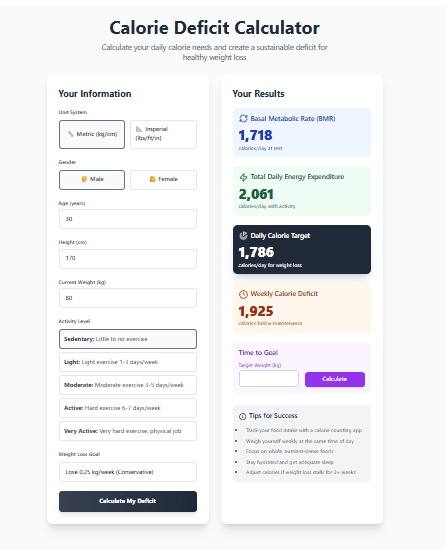
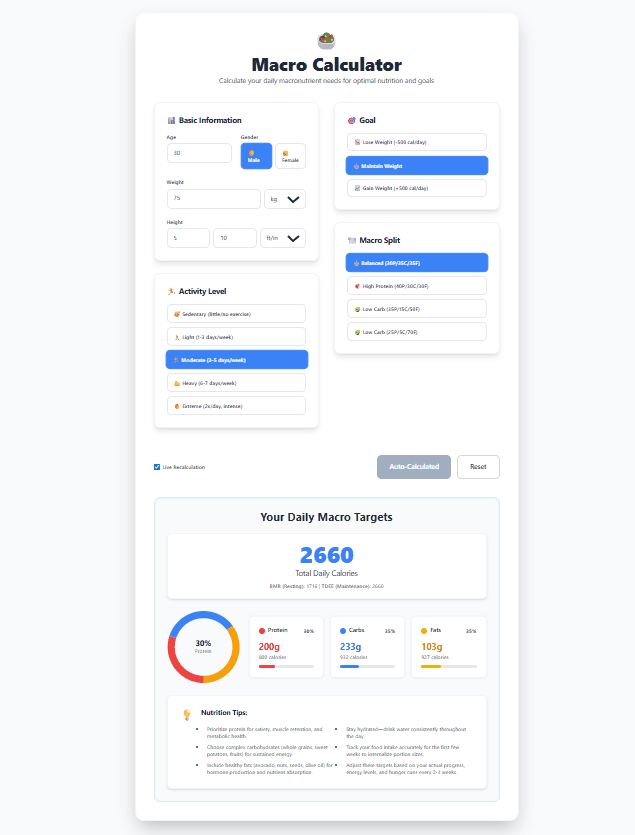
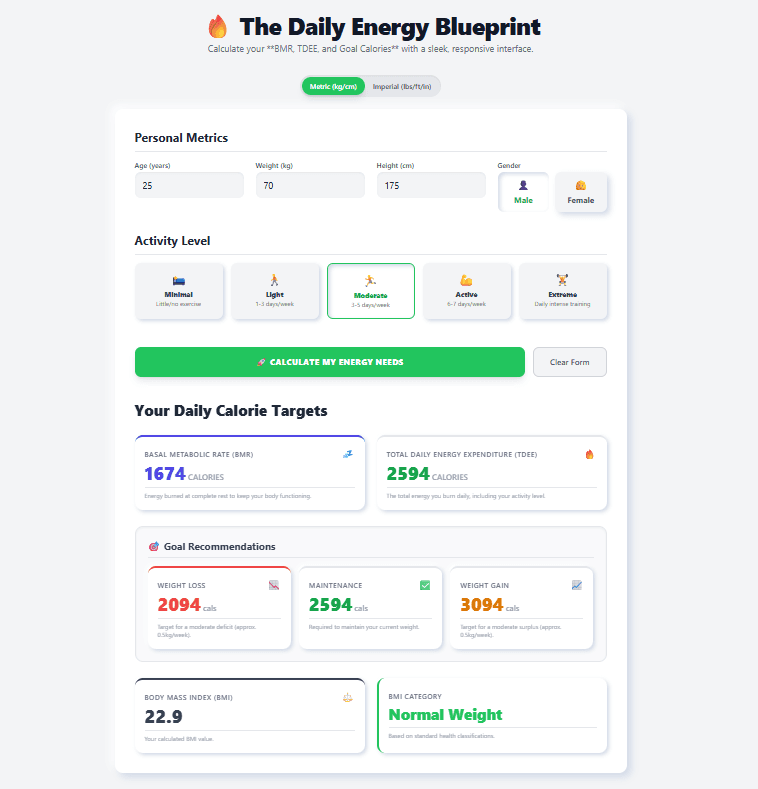
Quick Start: If you want to skip straight to calculating your numbers, use our Solvezi Calorie Calculator. But I strongly recommend reading this guide first—understanding why matters more than just getting numbers.
Chapter 1: What Is a Calorie? The Fundamentals Most People Get Wrong
1.1 The Scientific Definition
A calorie (technically a kilocalorie, or kcal) is a unit of energy. Specifically, it's the amount of energy required to raise the temperature of 1 kilogram of water by 1 degree Celsius.
But that textbook definition doesn't help you. Here's what matters:
A calorie represents potential energy stored in food that your body can convert into:
- Movement (walking, exercising, fidgeting)
- Heat (maintaining body temperature)
- Cellular functions (breathing, thinking, healing)
- Storage (as glycogen or fat for future use)
1.2 The Macronutrient Breakdown
Different nutrients contain different amounts of energy:
| Nutrient | Calories per Gram | Primary Functions |
|---|---|---|
| Carbohydrates | 4 kcal | Immediate energy, brain fuel, glycogen storage |
| Protein | 4 kcal | Muscle building, enzyme production, immune function |
| Fat | 9 kcal | Hormone production, vitamin absorption, long-term energy |
| Alcohol | 7 kcal | Non-essential energy, can displace nutrients |
Important Note: These numbers are averages. The thermic effect of food (energy used to digest) varies:
- Protein: 20-30% of calories burned during digestion
- Carbohydrates: 5-10% burned
- Fats: 0-3% burned
This explains why high-protein diets often feel more effective—you're literally burning more calories just by eating.
1.3 The Energy Balance Equation: More Than Simple Math
The basic equation everyone knows:
Energy In (Food) - Energy Out (Activity + Metabolism) = Energy Balance
If Energy Balance is:
- Positive: Weight gain
- Negative: Weight loss
- Zero: Weight maintenance
But here's where it gets interesting—this equation isn't static. It's a dynamic system where changing one variable affects the others.
The Adaptive Components:
- Energy In Affects Energy Out: When you eat less, your body may reduce non-essential movement (like fidgeting) to conserve energy.
- Body Composition Affects Both: More muscle mass increases your baseline calorie burn.
- Hormones Regulate Everything: Insulin, leptin, ghrelin, and thyroid hormones constantly adjust how energy is stored and used.
Think of it like a smart thermostat. If you open a window (eat fewer calories), the heater might work harder (increase hunger signals) or other rooms might get cooler (reduce non-essential functions).
1.4 Common Myths Debunked
Myth 1: "All calories are equal" Truth: While a calorie is a calorie in terms of energy, different calorie sources affect hunger, hormones, and metabolism differently. 100 calories of broccoli affects your body differently than 100 calories of soda.
Myth 2: "Eating late at night makes you fat" Truth: Total daily calories matter more than timing. However, late-night eating often involves poorer food choices and mindless eating, leading to overconsumption.
Myth 3: "You can't lose weight because of a slow metabolism" Truth: Metabolic differences between individuals are smaller than most think. A "slow metabolism" typically accounts for less than 200-300 calories difference, not the thousands people imagine.
Myth 4: "Some foods have negative calories" Truth: No food requires more energy to digest than it provides. Celery comes close (about 10 calories per stalk, takes ~2 calories to digest), but it's not negative.
Chapter 2: BMR (Basal Metabolic Rate): Your Body's Operating System
2.1 What BMR Really Means
Your Basal Metabolic Rate (BMR) is the number of calories your body needs to maintain basic physiological functions at complete rest. This includes:
- Cardiovascular function - Heart beating, blood circulating
- Respiratory function - Breathing, oxygen exchange
- Neurological function - Brain activity, nerve signaling
- Cellular maintenance - Repairing cells, producing new ones
- Organ function - Liver detoxification, kidney filtration, etc.
- Temperature regulation - Maintaining 98.6°F/37°C body temperature
Key Insight: Your BMR accounts for 60-75% of your total daily energy expenditure. This means most of the calories you burn happen without any conscious effort.
2.2 Factors That Influence BMR
1. Lean Body Mass (Most Important Factor)
Muscle tissue is metabolically active—it burns calories just by existing. Each pound of muscle burns approximately 6 calories per day at rest, while each pound of fat burns about 2 calories.
Practical Application: This explains why strength training is so valuable for long-term weight management. More muscle means a higher BMR.
2. Age
BMR decreases approximately 1-2% per decade after age 20, primarily due to muscle loss (sarcopenia) and hormonal changes.
But here's the hopeful part: This decline isn't inevitable. Resistance training and adequate protein can significantly slow or even reverse age-related muscle loss.
3. Gender
Men typically have higher BMRs due to:
- Greater muscle mass
- Larger organs
- Different hormonal profiles
On average, men's BMR is 5-10% higher than women's of the same weight and age.
4. Genetics
Genetic factors may account for up to 20% variation in BMR between individuals. However, lifestyle factors (diet, exercise, sleep) still play a much larger role.
5. Hormones
- Thyroid hormones: Primary regulators of metabolic rate
- Testosterone: Promotes muscle growth, increases BMR
- Estrogen: Influences fat distribution and energy utilization
- Cortisol: Chronic elevation can reduce BMR over time
6. Body Size
Larger bodies have more cells requiring energy, so BMR increases with size. This is why taller people typically have higher BMRs.
2.3 The Mifflin-St Jeor Equation: Why It's the Gold Standard
While several equations exist, the Mifflin-St Jeor equation is considered most accurate for the general population, with error margins of about 10%.
Metric Formulas:
For Men:
BMR = (10 × weight in kg) + (6.25 × height in cm) - (5 × age) + 5
For Women:
BMR = (10 × weight in kg) + (6.25 × height in cm) - (5 × age) - 161
Imperial Formulas:
For Men:
BMR = (4.536 × weight in lbs) + (15.88 × height in inches) - (5 × age) + 5
For Women:
BMR = (4.536 × weight in lbs) + (15.88 × height in inches) - (5 × age) - 161
Example Calculation: A 30-year-old woman, 65kg (143 lbs), 165cm (5'5"):
BMR = (10 × 65) + (6.25 × 165) - (5 × 30) - 161
= 650 + 1031.25 - 150 - 161
= 1370.25 calories/day
2.4 Other Equations (And Why They're Less Accurate)
- Harris-Benedict (1919): The original equation, but based on outdated population data
- Katch-McArdle: Requires body fat percentage, more accurate for athletic populations
- Cunningham: Similar to Katch-McArdle, uses lean body mass
For most people, Mifflin-St Jeor provides the best balance of accuracy and simplicity.
2.5 The Dangers of Eating Below BMR
Many popular diets recommend extremely low calorie intake, often below BMR. This is problematic because:
Physiological Consequences:
- Muscle Loss: When calories are too low, your body breaks down muscle for energy
- Metabolic Adaptation: Your body reduces BMR to conserve energy
- Hormonal Disruption: Thyroid hormones decrease, cortisol increases, reproductive hormones become imbalanced
- Nutrient Deficiencies: It's difficult to get adequate vitamins and minerals on very low calories
Psychological Consequences:
- Increased Food Focus: Deprivation leads to obsessive thoughts about food
- Binge-Restrict Cycles: Extreme restriction often triggers overeating episodes
- Reduced Quality of Life: Constant hunger and fatigue affect work, relationships, and enjoyment
Rule of Thumb: Unless medically supervised, never eat below your BMR for extended periods.
Chapter 3: TDEE (Total Daily Energy Expenditure): Your Complete Energy Picture
3.1 The Four Components of TDEE
TDEE = BMR + TEF + EAT + NEAT
1. BMR (60-75% of TDEE)
As discussed, your baseline metabolic rate.
2. TEF - Thermic Effect of Food (10%)
The energy required to digest, absorb, and process nutrients.
- Protein: 20-30% of its calories burned during digestion
- Carbohydrates: 5-10%
- Fats: 0-3%
- Mixed meal: Typically 10% of total calories
Practical Tip: Increasing protein intake slightly increases your daily calorie burn through TEF.
3. EAT - Exercise Activity Thermogenesis (5-10%)
Intentional exercise like running, lifting weights, or cycling.
Important Note: People often overestimate exercise calories. A 30-minute run might burn 300 calories, which is easily negated by a post-workout snack.
4. NEAT - Non-Exercise Activity Thermogenesis (15-30%)
All movement that isn't formal exercise:
- Walking (biggest contributor for most people)
- Fidgeting
- Household chores
- Gardening
- Standing vs sitting
- Taking stairs
NEAT is highly variable and can differ by up to 2000 calories/day between individuals with similar stats!
3.2 Activity Multipliers: Choosing Honestly
The most common mistake in calorie calculation is overestimating activity level.
Activity Level Definitions:
| Level | Multiplier | Description |
|---|---|---|
| Sedentary | 1.2 | Desk job, little intentional exercise, mostly sitting |
| Lightly Active | 1.375 | Light exercise 1-3 days/week, on feet occasionally |
| Moderately Active | 1.55 | Moderate exercise 3-5 days/week, active job or daily movement |
| Very Active | 1.725 | Hard exercise 6-7 days/week, physically demanding job |
| Extremely Active | 1.9 | Professional athlete, heavy physical labor, multiple daily workouts |
Reality Check Questions:
- Do you sit at a desk 8+ hours daily? (Probably sedentary)
- Do you track steps? Less than 5,000 = sedentary, 5,000-7,500 = light, 7,500-10,000 = moderate
- Does your job involve physical labor? Most office jobs don't count
- Do you exercise consistently, or just intend to?
Conservative Approach: When in doubt, choose the lower activity level. You can always increase calories later if needed.
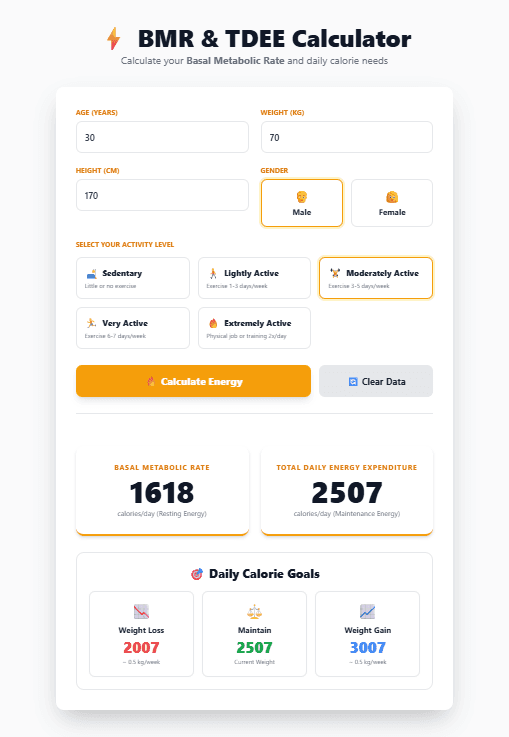
3.3 Calculating Your TDEE
Formula: TDEE = BMR × Activity Multiplier
Example: Our 30-year-old woman from earlier (BMR = 1370):
- Sedentary: 1370 × 1.2 = 1644 calories/day
- Lightly active: 1370 × 1.375 = 1884 calories/day
- Moderately active: 1370 × 1.55 = 2124 calories/day
See how activity dramatically changes needs? This is why "one-size-fits-all" calorie recommendations fail.
3.4 The Problem with Exercise Calorie Estimates
Fitness trackers and exercise machines notoriously overestimate calorie burn by 20-50%. Reasons:
- Individual Variation: Two people doing identical workouts burn different calories
- Efficiency: Fit people burn fewer calories doing the same activity (their bodies are more efficient)
- Compensation: People often move less after exercise or eat more
Better Approach: Consider exercise a bonus, not a license to eat significantly more. If you're hungry after exercise, add 100-300 calories of protein-rich food, not 500-800 calories of treats.
Chapter 4: Setting Calorie Targets for Specific Goals
4.1 Weight Loss: Creating a Sustainable Deficit
The Goldilocks Deficit: Not Too Big, Not Too Small
Optimal Deficit: 300-500 calories below TDEE
Why This Range Works:
- Preserves Muscle: Larger deficits cause more muscle loss
- Manageable Hunger: Extreme deficits lead to constant hunger and cravings
- Sustainable: You can maintain this eating pattern long-term
- Protects Metabolism: Minimizes metabolic adaptation
Calculating Your Weight Loss Calories
- Calculate TDEE (as shown in Chapter 3)
- Subtract 300-500 calories
- Ensure above minimum thresholds
Minimum Safe Calories:
- Women: 1200 calories/day (unless medically supervised)
- Men: 1500 calories/day (unless medically supervised)
Example: TDEE = 2000 calories
- Moderate deficit: 2000 - 500 = 1500 calories
- Conservative deficit: 2000 - 300 = 1700 calories
Expected Weight Loss Rates
| Daily Deficit | Weekly Deficit | Expected Weekly Loss |
|---|---|---|
| 300 calories | 2100 calories | 0.6 lbs (0.27 kg) |
| 500 calories | 3500 calories | 1 lb (0.45 kg) |
| 750 calories | 5250 calories | 1.5 lbs (0.68 kg) |
Note: 1 lb of fat ≈ 3500 calories
When You Should Eat More (Paradoxical but True)
If your calculated weight loss calories are:
- Below your BMR
- Causing extreme hunger
- Leading to binge episodes
- Causing fatigue and poor workouts
Solution: Eat at maintenance for 2-4 weeks, then try a smaller deficit (200-300 calories). Sometimes slower progress is faster in the long run.
4.2 Muscle Gain: The Smart Surplus
The Muscle Growth Reality Check
Maximum natural muscle gain per month:
- Beginners: 1-2 lbs (0.45-0.9 kg)
- Intermediate: 0.5-1 lb (0.23-0.45 kg)
- Advanced: 0.25-0.5 lb (0.11-0.23 kg)
Since muscle is only about 70% water/protein (the rest is fat/glycogen), you need fewer extra calories than you might think.
The Optimal Surplus
Beginners: +300 to +500 calories above TDEE Intermediate/Advanced: +200 to +300 calories above TDEE
Why Not More? Excess calories primarily become fat, not muscle. A 1000-calorie surplus might add 0.5 lbs of muscle and 1.5 lbs of fat.
Calculating Your Muscle Gain Calories
- Calculate TDEE
- Add appropriate surplus
- Prioritize protein (0.7-1g per lb of body weight)
Example: TDEE = 2500 calories
- Beginner surplus: 2500 + 500 = 3000 calories
- Intermediate surplus: 2500 + 300 = 2800 calories
The Bulk-Cut Cycle Alternative
Instead of a small perpetual surplus, some prefer:
- 8-12 week bulk: +300-500 calorie surplus
- 4-6 week cut: 300-500 calorie deficit
- 4 week maintenance: Reset hormones and sanity
This can minimize fat gain while allowing for muscle growth phases.
4.3 Maintenance: The Most Important (And Neglected) Phase
Why Maintenance Matters
- Metabolic Recovery: After weight loss, maintenance allows hormones to normalize
- Behavioral Practice: Learn to maintain without tracking everything
- Psychological Break: Dieting is mentally taxing; maintenance provides relief
- Long-Term Success: People who practice maintenance between diets keep weight off better
How to Find Your True Maintenance
- Theoretical: Calculate TDEE as before
- Empirical: Track intake and weight for 2-4 weeks
- Weight stable = at maintenance
- Weight trending up = above maintenance
- Weight trending down = below maintenance
Pro Tip: Your maintenance calories post-diet will be lower than calculated due to:
- Less body mass to maintain
- Potential metabolic adaptation
- Reduced NEAT (you may move less subconsciously)
4.4 Special Populations and Considerations
Postpartum Women
- Add 300-500 calories for breastfeeding
- Be patient—hormones need 6-12 months to normalize
- Focus on nutrient density over strict calorie counting initially
Older Adults (65+)
- Protein needs increase (1.0-1.2g per kg body weight)
- May need slightly fewer calories due to reduced activity
- Resistance training becomes even more important to preserve muscle
Athletes and Very Active Individuals
- May need to cycle calories (higher on training days)
- Carbohydrate timing matters more
- Larger calorie deficits can impair performance
Individuals with Medical Conditions
- Diabetes: Focus on consistent carbohydrate intake
- Thyroid issues: Work with a doctor; metabolic rate may be affected
- PCOS: Insulin resistance may require lower carbohydrate approach
Chapter 5: Macronutrient Distribution - Beyond Just Calories
5.1 Protein: The Building Block
Protein Requirements by Goal
| Goal | Protein per kg | Protein per lb |
|---|---|---|
| Sedentary | 0.8g | 0.36g |
| General fitness | 1.2-1.4g | 0.55-0.64g |
| Fat loss | 1.6-2.2g | 0.73-1.0g |
| Muscle gain | 1.6-2.2g | 0.73-1.0g |
| Endurance athletes | 1.4-1.8g | 0.64-0.82g |
Why Higher Protein During Fat Loss?
- Preserves Muscle: When in a deficit, protein helps maintain lean mass
- Increases Satiety: Protein is the most filling macronutrient
- Boosts TEF: 20-30% of protein calories burned during digestion
- Supports Recovery: Maintains workout performance despite deficit
Complete vs Incomplete Proteins
- Complete: Animal products, soy, quinoa, buckwheat (contain all essential amino acids)
- Incomplete: Most plant proteins (need to be combined throughout the day)
5.2 Carbohydrates: Fuel and Function
Carb Requirements by Activity Level
| Activity Level | Carbs per kg | Carbs per lb |
|---|---|---|
| Sedentary | 2-3g | 0.9-1.4g |
| Light exercise | 3-4g | 1.4-1.8g |
| Moderate exercise | 4-5g | 1.8-2.3g |
| Heavy training | 5-7g | 2.3-3.2g |
| Very heavy/2x day | 7-10g | 3.2-4.5g |
Types of Carbohydrates
- Fiber: 25-38g recommended daily for adults
- Sugars: Limit added sugars to <10% of total calories
- Starches: Provide sustained energy
Carb Timing Strategies
- General: Evenly distributed throughout day
- Performance: More around workouts
- Fat loss: May benefit from lower carbs, higher protein/fat
5.3 Fats: Essential but Often Misunderstood
Minimum Fat Requirements
- Absolute minimum: 0.3g per lb body weight (for essential fatty acids)
- Recommended minimum: 0.4-0.5g per lb body weight
- Typical range: 20-35% of total calories
Types of Fats
- Saturated: Limit to <10% of total calories
- Monounsaturated: Heart-healthy (olive oil, avocados, nuts)
- Polyunsaturated: Essential (omega-3 and omega-6)
- Trans fats: Avoid completely
Omega-3 to Omega-6 Ratio
- Ideal: 1:1 to 1:4
- Typical Western diet: 1:10 to 1:20
- How to improve: Eat more fatty fish, flax, chia; reduce processed vegetable oils
5.4 Putting It All Together: Sample Distributions
Example: 2000 Calories, Fat Loss Focus
- Protein: 150g (600 calories, 30%)
- Carbs: 175g (700 calories, 35%)
- Fat: 78g (700 calories, 35%)
Example: 2500 Calories, Muscle Gain Focus
- Protein: 188g (750 calories, 30%)
- Carbs: 281g (1125 calories, 45%)
- Fat: 69g (625 calories, 25%)
Flexible Approach
Start with hitting:
- Protein target (most important)
- Minimum fat (for health)
- Fill remainder with carbs/fat based on preference
Chapter 6: Tracking Methods - From Rigorous to Relaxed
6.1 Food Scales: Worth the Investment?
Pros:
- Most accurate method
- Reveals portion distortion (we're terrible at estimating)
- Educational—learn what 4oz of chicken actually looks like
Cons:
- Inconvenient, especially when eating out
- Can contribute to obsessive behavior in susceptible individuals
Recommendation: Use a scale for 2-4 weeks to calibrate your eye, then transition to visual estimates with periodic checks.
6.2 Measuring Cups and Spoons
Best for:
- Liquids (oil, milk, dressings)
- Powders (protein powder, flour)
- Small quantities where small errors matter
Watch out for:
- Packing down ingredients
- Heaping vs level measurements
- Different cup sizes (US vs metric)
6.3 Visual Estimation Methods
Hand-Based Portion Guide:
- Protein: Palm-sized = 3-4oz (20-30g protein)
- Vegetables: Fist-sized = 1 cup
- Carbohydrates: Cupped hand = 1/2 cup cooked
- Fats: Thumb-sized = 1 tablespoon
Plate Method:
- 1/2 plate: Non-starchy vegetables
- 1/4 plate: Protein
- 1/4 plate: Carbohydrates
- + thumb: Healthy fats
6.4 Digital Tracking Apps
Popular Options:
- Solvezi’s Tracker
- MyFitnessPal
- Lose It!
- Fitbit/Apple Health
Tips for Accurate App Use:
- Verify entries: Cross-check with nutrition labels
- Create custom foods: For meals you eat regularly
- Use recipes feature: For homemade meals
- Don't forget: Cooking oils, condiments, drinks
6.5 The Spectrum of Tracking Rigor
Level 1: Full Tracking (Most Accurate)
- Weigh everything
- Track every day
- Best for: Initial learning phase, breaking plateaus
Level 2: Partial Tracking
- Track only problem foods/meals
- Estimate the rest
- Best for: Maintenance, those with history of disordered eating
Level 3: Mental Tracking
- No writing things down
- Rough calorie/macro awareness
- Best for: Experienced individuals, long-term maintainers
Level 4: No Tracking, Just Habits
- Follow consistent meal patterns
- Use portion control methods
- Best for: Those who find tracking triggers unhealthy behaviors
6.6 How Long to Track?
Minimum: 4 weeks to establish awareness Optimal: 8-12 weeks to build habits Maintenance: Periodic tracking (1 week every month or two)
Signs You're Ready to Track Less:
- You can accurately estimate portions
- Your weight is stable without tracking
- Tracking feels tedious rather than helpful
- You have established go-to meals that fit your targets
Chapter 7: Common Mistakes and How to Avoid Them
7.1 Mistake #1: The Weekend Undo
Problem: Perfect weekdays, then overeating Friday-Sunday negates the deficit.
The Math:
- Weekday deficit: 500 calories × 5 days = 2500 calories
- Weekend overage: 1000 calories × 2 days = 2000 calories
- Net weekly deficit: Only 500 calories (0.14 lb loss instead of 1 lb)
Solutions:
- Weekly averaging: Aim for same deficit spread over 7 days
- Planning ahead: Decide in advance what treats you'll have
- Activity boost: Add extra movement on weekends
- Mindful drinking: Alcohol calories add up quickly
7.2 Mistake #2: Ignoring Liquid Calories
Common offenders:
- Coffee creamer (50-100 calories per serving)
- Juice/smoothies (150-300 calories)
- Alcohol (100-200 calories per drink)
- Soda (150 calories per can)
- Sports drinks (50-100 calories)
Hidden trap: Liquid calories don't trigger satiety signals like solid food.
Fix: Track all beverages, use zero-calorie alternatives, or budget for favorites.
7.3 Mistake #3: Not Accounting for Cooking Methods
Calorie differences:
- 4oz chicken breast, baked: 120 calories
- 4oz chicken breast, fried: 240+ calories
- Vegetables, steamed: minimal added calories
- Vegetables, roasted in oil: +100-200 calories
Solution: Track cooking oils (1 tablespoon olive oil = 120 calories) and choose lower-calorie methods when possible.
7.4 Mistake #4: The "Healthy Food" Overeat
Healthy ≠ Low Calorie:
- Avocado: 240 calories each
- Nuts: 160-200 calories per ounce
- Olive oil: 120 calories per tablespoon
- Dried fruit: 100 calories per small handful
- Granola: 200-300 calories per 1/2 cup
Mindset shift: "Healthy" foods still have calories. Portion control matters.
7.5 Mistake #5: Not Recalculating After Weight Loss
The issue: As you lose weight, your TDEE decreases.
Example:
- Starting: 180 lbs, TDEE 2200 calories, eating 1700 (-500 deficit)
- After losing 20 lbs: 160 lbs, TDEE 1950 calories, still eating 1700 (-250 deficit)
Result: Weight loss slows, frustration increases.
Solution: Recalculate TDEE every 5-10 lbs lost.
7.6 Mistake #6: Perfectionism Leading to Abandonment
Scenario:
- Miss calorie target one day
- Feel like a failure
- Think "I've ruined everything"
- Abandon efforts completely
Better approach:
- Miss target one day
- Recognize it's just one data point
- Return to plan the next day
- Look at weekly average instead
Remember: One bad meal doesn't ruin your week. One bad week doesn't ruin your month.
Chapter 8: Advanced Strategies and Nuances
8.1 Metabolic Adaptation: Your Body Fights Back
What Happens During Prolonged Deficits
- NEAT decreases: You fidget less, choose to sit more
- Exercise efficiency improves: Burn fewer calories doing same workout
- Hormonal changes: Leptin decreases (hunger increases), thyroid hormones may decrease
- Muscle loss: Some muscle is lost along with fat
Degree of Adaptation
- Small deficits (10-20% below TDEE): Minimal adaptation
- Moderate deficits (20-30% below TDEE): Noticeable adaptation after 8-12 weeks
- Large deficits (>30% below TDEE): Significant, rapid adaptation
Countermeasures
- Diet breaks: 1-2 weeks at maintenance every 8-12 weeks of dieting
- Refeed days: 1-2 higher calorie days (focus on carbs) to boost leptin
- Reverse dieting: Slowly increase calories after extended dieting
8.2 Reverse Dieting: The Post-Diet Strategy
What It Is
Gradually increasing calories from deficit to maintenance to:
- Minimize fat regain
- Restore metabolic rate
- Normalize hormones
- Build sustainable eating habits
How to Do It
After reaching goal weight:
- Add 50-100 calories per week
- Focus on adding carbohydrates
- Monitor weight weekly
- Stop when weight stabilizes (this is your new maintenance)
Timeframe: 4-12 weeks depending on how long and how large your deficit was.
8.3 Nutrient Timing: When It Matters (And When It Doesn't)
When Timing Matters Most
- Pre-workout (1-2 hours before): Carbs for energy, protein optional
- Post-workout (within 2 hours): Protein for muscle repair, carbs to replenish glycogen
- Before fasted periods: Protein before sleep or long gaps between meals
When Timing Matters Less
- For general weight loss: Total daily intake matters more than timing
- For the average exerciser: Unless training fasted or multiple times daily
- For muscle gain: As long as protein is spread throughout the day
Practical Approach
- Priority 1: Hit daily calorie and protein targets
- Priority 2: Spread protein across 3-4 meals
- Priority 3: Time carbs around workouts if training hard
- Priority 4: Everything else is individual preference
8.4 Intermittent Fasting and Calories
The Truth About IF
- Not magic: Works by reducing eating window, which often reduces total calories
- Can be helpful: For those who prefer fewer, larger meals
- May not be ideal: For those with blood sugar issues, high activity levels, or history of disordered eating
Calorie Awareness Still Required
IF alone doesn't guarantee weight loss. You can still overeat in a restricted window.
Combining IF with Calorie Tracking
- Calculate your daily targets
- Divide between your eating window
- Track to ensure you're not over/under eating
8.5 Weekly vs Daily Calorie Targets
Benefits of Weekly Averaging
- Flexibility: Higher calories on social days, lower on quiet days
- Realistic: Matches natural eating patterns
- Psychological: Reduces "all-or-nothing" thinking
How to Calculate Weekly Targets
- Daily target × 7 = Weekly target Example: 1500 daily × 7 = 10,500 weekly
- Distribute based on schedule:
- Weekdays: 1400 (5 days = 7,000)
- Weekend days: 1750 (2 days = 3,500)
- Total: 10,500
Tracking Weekly Averages
Most apps show weekly averages. Aim to be within 100 calories of your weekly target.
Chapter 9: Sustainability - Making It Last
9.1 The Psychology of Sustainable Tracking
Signs of Healthy Tracking
- Feel in control, not controlled
- Can enjoy social events without anxiety
- Miss a day and return easily
- Use data to inform, not judge
Signs of Unhealthy Tracking
- Anxiety when you can't track
- Guilt over "bad" days
- Isolation to avoid untrackable meals
- Numbers dictate self-worth
If Tracking Becomes Problematic
- Switch to habit-based approach
- Track only certain meals/foods
- Take regular breaks
- Seek professional help if needed
9.2 Building a Flexible Framework
The 80/20 Rule
80% of meals: Planned, nutrient-dense, portion-controlled 20% of meals: Flexible, social, less structured
Creating Go-To Meals
Develop 5-10 breakfasts, lunches, and dinners that:
- You enjoy eating
- Fit your calorie/macro targets
- Are easy to prepare
- Use available ingredients
This reduces decision fatigue and makes sticking to targets easier.
9.3 Social Situations and Dining Out
Before Going Out
- Check the menu online if possible
- Eat a small, protein-rich snack before going to reduce hunger
- Decide in advance what you'll order
- Adjust other meals if you know you'll be eating more
At the Restaurant
- Ask for modifications: Dressings on side, grilled instead of fried
- Use the hand method for portion estimation
- Box half immediately if portions are large
- Focus on company more than food
Alcohol Considerations
- Budget calories: Know your drink calories
- Pace yourself: Alternate with water
- Choose wisely: Dry wines, light beers, spirits with zero-calorie mixers
- Limit quantity: 1-2 drinks max when trying to lose weight
9.4 Travel and Routine Disruption
Planning Ahead
- Pack snacks: Protein bars, nuts, fruit
- Research options: Find grocery stores or healthier restaurants
- Stay hydrated: Travel dehydrates, which can feel like hunger
During Travel
- Focus on protein: Helps maintain muscle and control hunger
- Move when possible: Walk, use hotel gym, do bodyweight exercises
- Accept imperfection: Travel is temporary; return to routine when home
The "Reset" Mentality
After a trip or off-plan period:
- Don't "make up" for it with extreme restriction
- Do return to your normal routine
- Weigh yourself once after a few normal days
- Continue from there
9.5 When Life Gets Stressful
Stress and Weight Management
Chronic stress:
- Increases cortisol → can promote abdominal fat storage
- Disrupts hunger hormones → may increase cravings
- Reduces sleep quality → affects appetite regulation
Simplified Approaches for Stressful Times
- Maintenance phase: Focus on maintaining, not losing
- Minimum viable tracking: Just track protein or one meal
- Habit stacking: Keep one healthy habit (like daily vegetables)
- Self-compassion: Progress isn't linear; do what you can
Chapter 10: Frequently Asked Questions
Q1: How do I calculate my calories?
Complete Answer:
Calculate BMR using Mifflin-St Jeor equation:
- Men: (10 × weight in kg) + (6.25 × height in cm) - (5 × age) + 5
- Women: (10 × weight in kg) + (6.25 × height in cm) - (5 × age) - 161
Choose activity multiplier:
- Sedentary (office job, little exercise): ×1.2
- Lightly active (light exercise 1-3 days/week): ×1.375
- Moderately active (moderate exercise 3-5 days/week): ×1.55
- Very active (hard exercise 6-7 days/week): ×1.725
- Extremely active (athlete, physical job): ×1.9
Multiply: TDEE = BMR × Activity Multiplier
Adjust for goal:
- Weight loss: TDEE - 300 to 500 calories
- Muscle gain: TDEE + 300 to 500 calories
- Maintenance: TDEE
Easier method: Use our Solvezi Calorie Calculator which does all this automatically.
Q2: Is 1200 calories a lot to eat in a day?
Complete Answer: No, 1200 calories is actually quite low for most adults. While it's often touted as a "magic number" for weight loss, here's what you need to know:
When 1200 might be appropriate:
- Very petite, sedentary women (under 5'2" and minimal activity)
- Short-term medical supervised diets
- The elderly with significantly reduced muscle mass
Why 1200 is often too low:
- Nutrient deficiencies: Hard to get enough vitamins/minerals
- Muscle loss: High risk of losing muscle along with fat
- Metabolic slowdown: Your body adapts by burning fewer calories
- Unsustainability: Leads to rebound overeating
- Poor energy: Difficult to exercise or function optimally
Better approach: Calculate your actual TDEE and create a reasonable deficit (300-500 calories below). For most women, this will be 1400-1800 calories; for most men, 1800-2200 calories.
Q3: How to calculate a 1500 calorie diet?
Step-by-Step Guide:
First, verify 1500 is appropriate for you:
- Calculate your TDEE
- Ensure 1500 isn't below your BMR
- Aim for 300-500 calorie deficit from TDEE
Set macronutrient targets:
- Protein: 30-40% = 113-150g (450-600 calories)
- Carbohydrates: 30-40% = 113-150g (450-600 calories)
- Fat: 20-30% = 33-50g (300-450 calories)
Meal distribution example:
- Breakfast: 300-350 calories
- Lunch: 400-450 calories
- Dinner: 400-450 calories
- Snacks: 200-300 calories
Sample day at 1500 calories:
- Breakfast: 2 eggs + 1 slice toast + vegetables (300)
- Lunch: Chicken salad with light dressing (400)
- Snack: Greek yogurt + berries (150)
- Dinner: Salmon + sweet potato + broccoli (450)
- Snack: Apple + tablespoon peanut butter (200)
Key principles:
- Prioritize protein at each meal
- Include vegetables for volume and nutrients
- Use measuring tools initially
- Adjust based on hunger and energy
Q4: Do I need to count calories forever?
Answer: No, but you need to maintain awareness. Most successful maintainers:
- Track periodically: 1-2 weeks every few months
- Weigh regularly: Catch small gains before they become big
- Have "red flag" habits: Return to tracking if clothes get tight
- Use intuitive eating skills: Learned through initial tracking
Think of it like financial budgeting: you track closely when learning or when off-track, but eventually develop habits that work automatically.
Q5: What if I hit a plateau?
Troubleshooting steps:
- Recalculate TDEE: You weigh less now, so needs are lower
- Check tracking accuracy: Are you measuring everything?
- Review recent changes: More eating out? Less activity?
- Consider metabolic adaptation: May need diet break
- Be patient: Plateaus of 2-3 weeks are normal
Breaking plateaus:
- Temporary increase: Eat at maintenance for 1-2 weeks
- Activity change: Add different type of exercise
- Macro adjustment: Shift carbs/fat ratios
- Food variety: Change up your usual meals
Q6: How accurate are calorie counts on food labels?
Answer: FDA allows a 20% margin of error. So a 100-calorie item could be 80-120 calories. Tips:
- Trust whole foods: Fruits, vegetables, meats are more consistent
- Be wary of packaged snacks: More processing, more potential variance
- Use averages: Don't stress about perfection
- Focus on trends: Over time, small errors balance out
Q7: Can I build muscle while losing fat?
Answer: Yes, but with caveats:
Best candidates:
- Beginners to resistance training
- Overweight individuals
- Those returning after long break
Conditions needed:
- Adequate protein: 1.6-2.2g per kg body weight
- Small deficit: 200-300 calories below TDEE
- Progressive strength training: Gradually increase weights
- Patience: Slow process
Not ideal for:
- Already lean individuals
- Advanced lifters
- Those in large deficits
Q8: How do hormones affect calorie needs?
Key hormones and effects:
Women's menstrual cycle:
- Follicular phase (days 1-14): Normal metabolism
- Luteal phase (days 15-28): BMR increases 100-300 calories
- Practical tip: May need slightly more calories pre-menstruation
Thyroid hormones:
- Hypothyroidism: Can lower BMR by 10-20%
- Hyperthyroidism: Can increase BMR by 20-30%
- Important: Get tested if suspecting issues
Cortisol (stress hormone):
- Acute stress: Increases metabolism
- Chronic stress: Can lower metabolism, increase abdominal fat
Q9: What about cheat days/meals?
Better terminology: Planned flexibility meals
Benefits:
- Psychological break from restriction
- Social enjoyment without guilt
- Hormonal benefits from increased carbs (temporarily boosts leptin)
Guidelines:
- Plan them: Don't let them be impulsive binges
- Keep frequency reasonable: 1-2 times per week maximum
- Don't go crazy: 500-1000 calories over maintenance, not 3000+
- Return to plan: Next meal, next day
Q10: How do I maintain without tracking?
Skills to develop:
- Portion awareness: Hand method, plate method
- Hunger/fullness cues: Eat when hungry, stop when satisfied
- Regular weighing: Weekly to catch trends
- Clothing checks: How your clothes fit
- Habit routines: Consistent meal patterns
Transition plan:
- Start with full tracking
- Move to partial tracking (just one meal or protein)
- Try no tracking but weekly weigh-in
- Adjust based on results
Chapter 11: Special Topics and Niche Considerations
11.1 The Indian Diet Context
Common High-Calorie Foods
- Cooking fats: Ghee, oil, butter
- Fried foods: Samosas, pakoras, bhajis
- Sweets: Laddoos, jalebis, halwa
- Carb-heavy dishes: Rice, roti, naan, biryani
- Creamy curries: Butter chicken, paneer makhani
Lower-Calorie Adaptations
- Measure oils: Use tablespoons, not "glugs"
- Choose cooking methods: Tawa fry instead of deep fry
- Increase vegetables: Add extra to curries and sabzis
- Control portions: Smaller servings of rice/roti, larger of vegetables
- Protein focus: Dal, paneer, chicken, fish
Sample 1500-Calorie Indian Diet
- Breakfast: 2 egg bhurji with 1 roti (300)
- Lunch: 1 cup dal + 1/2 cup vegetables + 1/2 cup rice (400)
- Snack: 1 cup chaas or green tea (50)
- Dinner: 100g chicken curry + large salad + 1 roti (450)
- Snack: Fruit + handful of nuts (200)
11.2 Vegetarian and Vegan Considerations
Protein Challenges and Solutions
Common issues:
- Lower protein density in plant foods
- Incomplete amino acid profiles (need combining)
- Higher volume needed to hit targets
High-protein plant foods:
- Lentils, beans, chickpeas
- Tofu, tempeh, edamame
- Seitan (wheat gluten)
- Protein powders (pea, rice, hemp)
- Quinoa, amaranth
Combining proteins:
- Grains + legumes (rice + beans)
- Nuts/seeds + legumes
- Doesn't need to be same meal, just same day
11.3 Age-Related Considerations
After 40: The Metabolic Shift
Changes:
- Muscle loss: 3-8% per decade after 30
- Hormonal shifts: Menopause, andropause
- Activity decrease: Often move less
- Sleep changes: Can affect appetite hormones
Adjustments:
- Higher protein: 1.0-1.2g per kg minimum
- Strength training priority: Preserve muscle
- Smaller deficits: 200-300 calories maximum
- Patience: Slower results are normal
11.4 Medical Conditions
Always consult a doctor, but general guidelines:
Diabetes:
- Consistent carbohydrate intake
- Pair carbs with protein/fat
- Monitor blood sugar response
PCOS:
- Often insulin resistant
- May benefit from lower carb (not no carb)
- Strength training important
Thyroid disorders:
- Medication crucial first
- May need slightly adjusted TDEE
- Focus on nutrient density
Chapter 12: Tools and Resources
12.1 The Solvezi Calorie Calculator
Our comprehensive tool at /health-tools/calorie-calculator includes:
Features:
- Mifflin-St Jeor BMR calculation
- TDEE with accurate activity multipliers
- Goal-specific targets (loss, gain, maintenance)
- Macronutrient breakdown
- Progress tracking
- Indian food database
Benefits:
- No registration required
- Completely free
- Science-backed formulas
- Mobile-friendly interface
12.2 Other Recommended Tools
Tracking Apps:
- Cronometer: Most accurate database
- MyNetDiary: Good for beginners
- Carbon Diet Coach: Adaptive algorithm
Measurement Tools:
- Food scale: Any basic digital scale
- Measuring cups/spoons: Standard set
- Body tape measure: For circumference tracking
Educational Resources:
- Examine.com: Supplement and nutrition research
- Precision Nutrition: Evidence-based articles
- Stronger by Science: In-depth analysis
Conclusion: Your Journey to Calorie Mastery
The Three Stages of Calorie Awareness
Stage 1: Learning (Weeks 1-12)
- Track everything
- Learn portion sizes
- Understand your body's responses
- Use the calculator consistently
Stage 2: Applying (Months 3-6)
- Adjust based on results
- Develop personal patterns
- Handle special situations
- Build go-to meals
Stage 3: Maintaining (6+ months)
- Minimal tracking needed
- Intuitive eating skills
- Regular check-ins
- Sustainable habits
Final Thoughts
Calorie awareness is a skill, not a sentence. Like any skill:
- It takes practice (expect imperfect days)
- It gets easier (eventually becomes second nature)
- It gives freedom (knowledge reduces anxiety)
- It's personal (what works for others may not work for you)
Remember why you started: to feel better, look better, live better. Calories are simply the units that help you get there.
Your Next Step
- Calculate your numbers using our Solvezi Calorie Calculator
- Start tracking for just one week
- Adjust as needed based on how you feel
- Revisit this guide when you have questions
You now have the knowledge. The only thing left is to apply it.
Disclaimer: This guide is for educational purposes. Consult with a healthcare provider before making significant dietary changes, especially if you have medical conditions. Individual needs may vary.