Angular Acceleration Calculator – Calculate α = Δω/Δt with Step-by-Step Solutions
Rotational motion is everywhere around us. From the spinning wheels of a car to the blades of a ceiling fan, understanding how objects rotate is essential in physics and engineering.
Angular acceleration is the rotational equivalent of linear acceleration—it tells us how quickly angular velocity changes over time. The core formula is simple: α = Δω/Δt, where α is angular acceleration, Δω is the change in angular velocity, and Δt is the time interval.
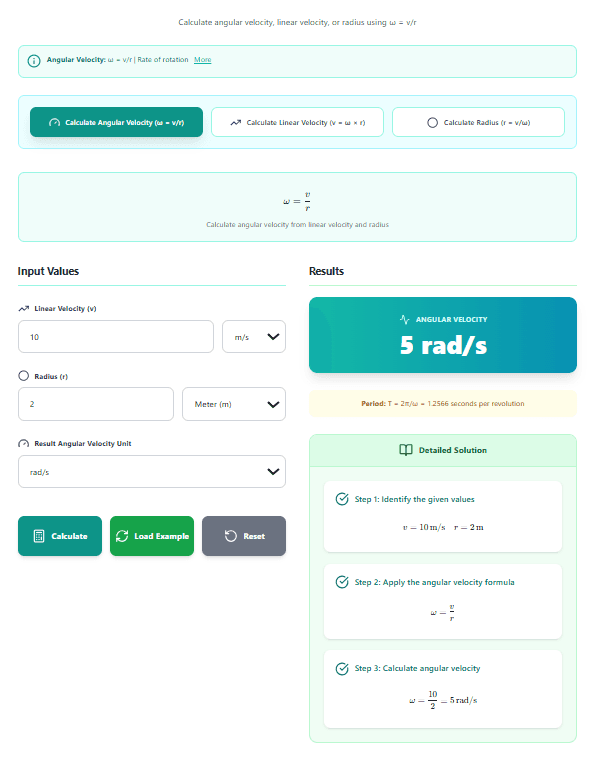
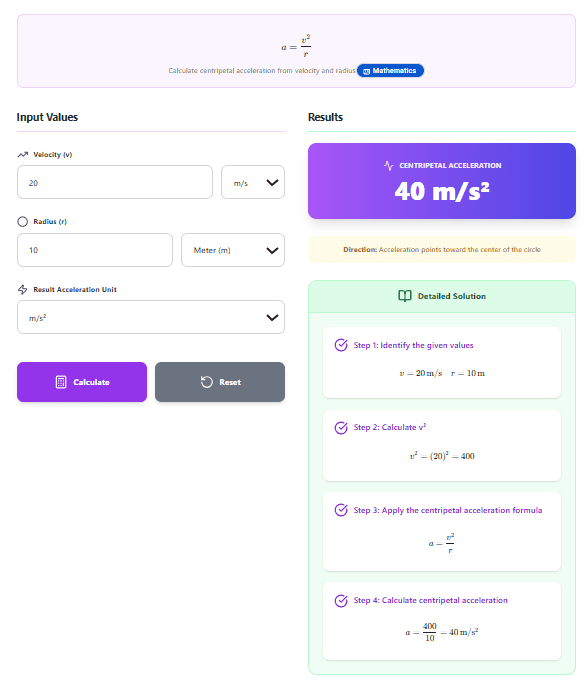
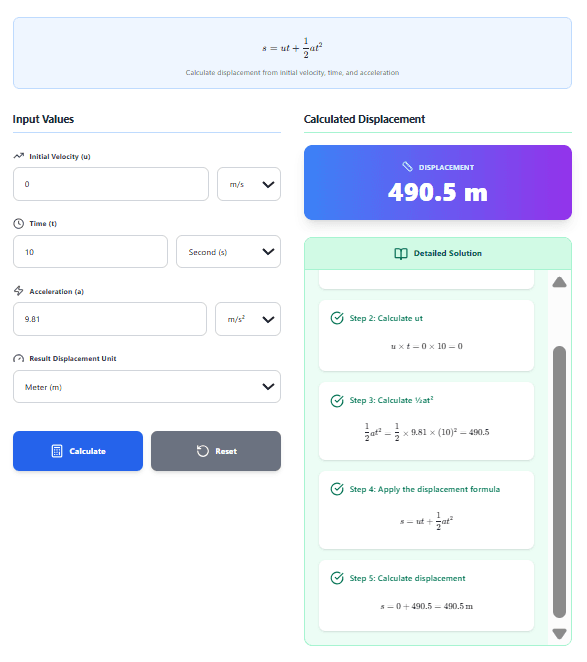
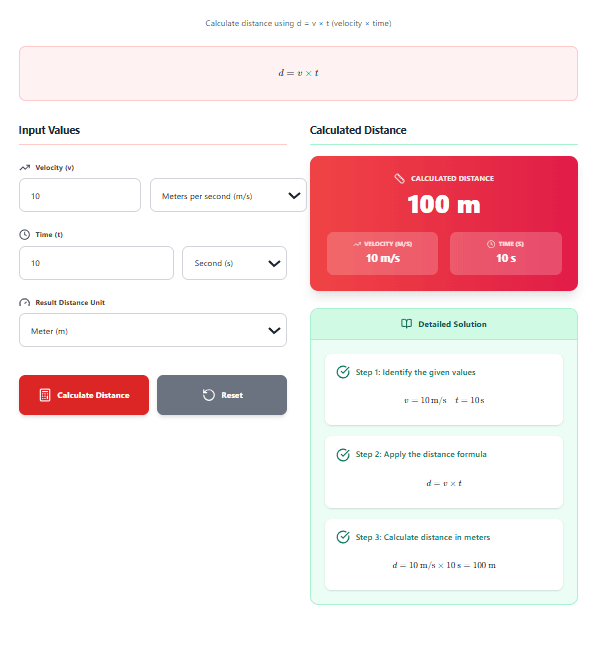
This calculator handles four different calculation modes based on what information you have available. Whether you need to find angular acceleration, final angular velocity, initial angular velocity, or time, this tool handles the math and unit conversions automatically.
Quick access: Use our free angular acceleration calculator here
What Does This Calculator Do?
This tool calculates angular motion values using the fundamental formula: α = Δω/Δt.
Four calculation modes:
Calculate Angular Acceleration (α = Δω/Δt) – Find angular acceleration from change in angular velocity and time
Calculate Final Angular Velocity (ω₂ = ω₁ + αt) – Find final velocity from initial velocity, acceleration, and time
Calculate Initial Angular Velocity (ω₁ = ω₂ - αt) – Find initial velocity from final velocity, acceleration, and time
Calculate Time (t = Δω/α) – Find time from change in angular velocity and acceleration
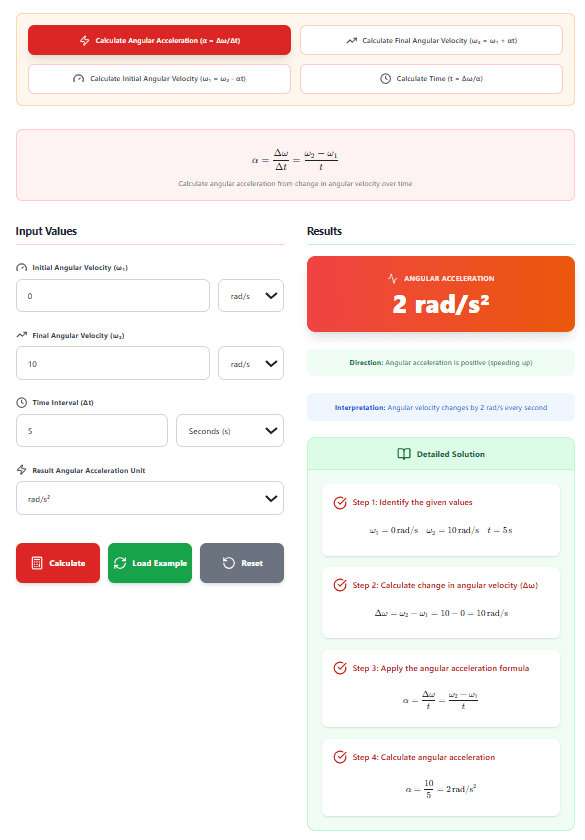
Here's a quick example:
A wheel accelerates from 0 rad/s to 10 rad/s in 5 seconds:
- Angular acceleration: 2 rad/s²
- Initial angular velocity: 0 rad/s
- Final angular velocity: 10 rad/s
- Time: 5 s
The calculator shows you exactly how it got the answer, including any unit conversions needed.
Understanding Angular Acceleration
What Is Angular Acceleration?
Angular acceleration (α) is the rate of change of angular velocity (ω) with respect to time (t). It describes how quickly an object's rotation speed is changing.
The Fundamental Formula
α = Δω/Δt = (ω₂ - ω₁)/t
Where:
- α = Angular acceleration
- ω₁ = Initial angular velocity
- ω₂ = Final angular velocity
- t = Time interval
Key Relationships
- Positive α → Angular velocity is increasing (speeding up)
- Negative α → Angular velocity is decreasing (slowing down)
- Zero α → Constant angular velocity (no acceleration)
Related Formulas
When angular acceleration is constant, these formulas apply:
- ω₂ = ω₁ + αt – Final velocity from initial, acceleration, and time
- ω₁ = ω₂ - αt – Initial velocity from final, acceleration, and time
- t = (ω₂ - ω₁)/α – Time from change in velocity and acceleration
Unit Support
One of the biggest challenges in rotational physics is keeping units consistent. This calculator handles conversions automatically for all supported units.
Angular Velocity Units
| Unit | Symbol | Conversion to rad/s |
|---|---|---|
| Radians per second | rad/s | 1 |
| Revolutions per minute | RPM | 2π/60 ≈ 0.10472 |
| Degrees per second | deg/s | π/180 ≈ 0.01745 |
| Revolutions per second | rps | 2π ≈ 6.28319 |
Angular Acceleration Units
| Unit | Symbol | Conversion from rad/s² |
|---|---|---|
| Radians per second squared | rad/s² | 1 |
| RPM per second | rpm/s | 2π/60 ≈ 0.10472 |
| Degrees per second squared | deg/s² | π/180 ≈ 0.01745 |
Time Units
| Unit | Symbol | Conversion to seconds |
|---|---|---|
| Second | s | 1 |
| Millisecond | ms | 0.001 |
| Minute | min | 60 |
| Hour | h | 3600 |
How to Use the Calculator
Step 1: Choose Your Mode
Select one of four calculation modes:
- Calculate Angular Acceleration – Use α = Δω/Δt
- Calculate Final Angular Velocity – Use ω₂ = ω₁ + αt
- Calculate Initial Angular Velocity – Use ω₁ = ω₂ - αt
- Calculate Time – Use t = Δω/α
Step 2: Enter Your Values
Depending on the mode, enter the required values with their units:
For "Angular Acceleration" mode:
- Initial angular velocity (ω₁)
- Final angular velocity (ω₂)
- Time (t)
For "Final Angular Velocity" mode:
- Initial angular velocity (ω₁)
- Angular acceleration (α)
- Time (t)
For "Initial Angular Velocity" mode:
- Final angular velocity (ω₂)
- Angular acceleration (α)
- Time (t)
For "Time" mode:
- Initial angular velocity (ω₁)
- Final angular velocity (ω₂)
- Angular acceleration (α)
Step 3: Select Result Unit
Choose your preferred unit for the result.
Step 4: Calculate
Click the "Calculate" button. The results appear instantly.
Step 5: Review the Solution
The calculator shows detailed steps explaining how the result was derived, including all unit conversions and intermediate calculations.
Step-by-Step Examples for Each Mode
Example 1: Calculate Angular Acceleration
Problem: A wheel increases its speed from 0 RPM to 120 RPM in 4 seconds. What is the angular acceleration in rad/s²?
Step 1: Identify the given values
- ω₁ = 0 RPM
- ω₂ = 120 RPM
- t = 4 s
Step 2: Convert RPM to rad/s
- ω₁ = 0 rad/s
- ω₂ = 120 × (2π/60) = 12.566 rad/s
Step 3: Calculate change in angular velocity
- Δω = 12.566 - 0 = 12.566 rad/s
Step 4: Apply the formula
- α = Δω/t = 12.566/4 = 3.1416 rad/s²
Result: The wheel accelerates at approximately 3.14 rad/s².
Example 2: Calculate Final Angular Velocity
Problem: A fan blade starts from rest and accelerates at 2 rad/s² for 3 seconds. What is its final angular velocity in RPM?
Step 1: Identify the given values
- ω₁ = 0 rad/s
- α = 2 rad/s²
- t = 3 s
Step 2: Apply the formula
- ω₂ = ω₁ + αt
- ω₂ = 0 + 2 × 3 = 6 rad/s
Step 3: Convert to RPM
- ω₂ = 6 × (60/2π) = 57.2958 RPM
Result: The fan blade reaches approximately 57.3 RPM.
Example 3: Calculate Initial Angular Velocity
Problem: A rotating disk reaches 50 rad/s after accelerating at 3 rad/s² for 10 seconds. What was its initial angular velocity?
Step 1: Identify the given values
- ω₂ = 50 rad/s
- α = 3 rad/s²
- t = 10 s
Step 2: Apply the rearranged formula
- ω₁ = ω₂ - αt
- ω₁ = 50 - 3 × 10 = 20 rad/s
Result: The initial angular velocity was 20 rad/s.
Example 4: Calculate Time
Problem: A spinning wheel speeds up from 5 rad/s to 25 rad/s with an angular acceleration of 4 rad/s². How long does this take?
Step 1: Identify the given values
- ω₁ = 5 rad/s
- ω₂ = 25 rad/s
- α = 4 rad/s²
Step 2: Calculate change in angular velocity
- Δω = 25 - 5 = 20 rad/s
Step 3: Apply the formula
- t = Δω/α = 20/4 = 5 s
Result: It takes 5 seconds.
When to Use Each Mode
Use "Calculate Angular Acceleration" when you have:
- Initial and final angular velocities
- Time taken
Typical scenarios:
- Spinning wheel acceleration
- Fan blade speed increase
- Engine RPM changes
Use "Calculate Final Angular Velocity" when you have:
- Initial angular velocity
- Angular acceleration
- Time
Typical scenarios:
- Starting from rest and accelerating
- Predicting future RPM
- Machine design calculations
Use "Calculate Initial Angular Velocity" when you have:
- Final angular velocity
- Angular acceleration
- Time
Typical scenarios:
- Working backward from a known final speed
- Determining starting conditions
- Braking analysis
Use "Calculate Time" when you have:
- Initial and final angular velocities
- Angular acceleration
Typical scenarios:
- Determining how long to reach a target speed
- Timing analysis in manufacturing
- Process control calculations
Comparison Table
| Mode | Formula | When to Use | Example |
|---|---|---|---|
| Angular Acceleration | α = (ω₂-ω₁)/t | Have velocities and time | Wheel speeding up |
| Final Velocity | ω₂ = ω₁ + αt | Have initial, acceleration, time | Fan from rest |
| Initial Velocity | ω₁ = ω₂ - αt | Have final, acceleration, time | Braking analysis |
| Time | t = (ω₂-ω₁)/α | Have velocities, acceleration | Time to target speed |
Real-World Applications
🚗 Automotive
- Engine RPM acceleration
- Tire rotation analysis
- Transmission gear changes
- Brake disc rotation
🏭 Manufacturing
- Conveyor belt speed changes
- Spindle acceleration in machining
- Motor start-up time
- Quality control timing
🌀 Everyday Life
- Ceiling fan speed changes
- Bicycle wheel rotation
- Merry-go-round acceleration
- Washing machine spin cycles
📚 Physics Education
- Rotational motion problems
- Kinematics lab experiments
- Conceptual understanding
- Homework verification
Common Questions About Angular Acceleration
Q: What is angular acceleration?
Angular acceleration (α) is the rate of change of angular velocity over time. It measures how quickly an object's rotational speed is changing, expressed in rad/s², RPM/s, or deg/s².
Q: What's the difference between angular velocity and angular acceleration?
Angular velocity (ω) is how fast something rotates—the rate of angular displacement. Angular acceleration (α) is how quickly that rotation speed changes—the rate of change of angular velocity.
Q: Can angular acceleration be negative?
Yes. Negative angular acceleration means the object is slowing down its rotation. This is sometimes called angular deceleration.
Q: What does positive angular acceleration mean?
Positive angular acceleration means the angular velocity is increasing—the object is spinning faster over time.
Q: What are the standard units for angular acceleration?
The SI unit is rad/s² (radians per second squared). Other common units include RPM/s and deg/s².
Q: How do I convert between angular velocity units?
Use the conversion factors: 1 RPM = 2π/60 rad/s, 1 deg/s = π/180 rad/s, 1 rps = 2π rad/s. The calculator handles these automatically.
Q: What is the formula for angular acceleration?
The formula is α = Δω/Δt = (ω₂ - ω₁)/t. This is the rotational equivalent of a = (v-u)/t in linear motion.
Q: How is angular acceleration related to linear acceleration?
Linear acceleration (a) equals angular acceleration (α) times radius (r): a = α × r. This connects rotational and linear motion.
Tips for Getting the Best Results
Choose the right mode. Make sure you're using the calculation mode that matches the information you have available.
Double-check your inputs. A single digit error changes everything. Take a moment to verify each number.
Understand your units. Know what units you're entering and what units you want for the result. The tool handles conversions automatically.
Review the steps. The step-by-step solution helps you learn the process and verify the calculation.
Use the Load Example button. Clicking "Load Example" populates the fields with sensible values so you can see how the calculator works.
Practice with different values. Try various combinations to see how angular acceleration responds to changes in velocity and time.
How This Calculator Helps Different Users
Students
- Check homework answers
- Learn from step-by-step solutions
- Understand angular motion concepts
- Build problem-solving skills
Teachers
- Create examples for lessons
- Verify student work
- Demonstrate rotational physics
- Save time on repetitive calculations
Engineers
- Quick design verification
- Unit conversion automation
- Reliable calculation results
- Time savings on routine checks
Everyone
- No manual unit conversions
- Instant, accurate results
- Clear explanations
- Free and accessible
What Makes This Calculator Different
Four calculation modes. Covers all common angular kinematics scenarios. No need to search for the right formula.
Complete unit support. Angular velocity, angular acceleration, and time units are all covered. No need to look up conversion factors.
Step-by-step solutions. Shows every calculation, not just the final answer. Learn as you calculate.
Load Example button. Instantly populate fields with sample values to see how the calculator works.
Interpretation guidance. For angular acceleration mode, the calculator explains whether the object is speeding up or slowing down.
Multiple output units. Choose the unit that works for your application.
Free and accessible. Available to anyone with an internet connection.
Final Thoughts
Understanding angular acceleration is essential for anyone studying rotational physics or working with rotating machinery. The formula α = Δω/Δt is simple but powerful—it describes how rotational motion changes over time.
This calculator covers all four variants of the angular acceleration formula, making it a comprehensive tool for rotational kinematics problems. Whether you're accelerating from rest, decelerating to a stop, or just calculating timing, this tool handles the math while you focus on understanding the physics.
Whether you're solving a homework problem, checking engineering calculations, or simply exploring rotational motion, this tool can save time and reduce mistakes by handling the math and unit conversions automatically.
Calculate Angular Acceleration Now – Free Tool
Tags: angular acceleration calculator, angular velocity calculator, rotational motion calculator, physics calculator, α = Δω/Δt, angular acceleration formula, rotational kinematics, physics tool, angular velocity converter, rpm calculator, rad/s calculator, rotational physics, mechanics calculator, step by step calculator, physics homework helper, science calculator, engineering calculator, how to calculate angular acceleration, angular acceleration from angular velocity and time, rotational motion formulas, angular acceleration units, rad/s², rpm/s, deg/s², final angular velocity, initial angular velocity, time calculation, free physics calculator, online angular acceleration calculator