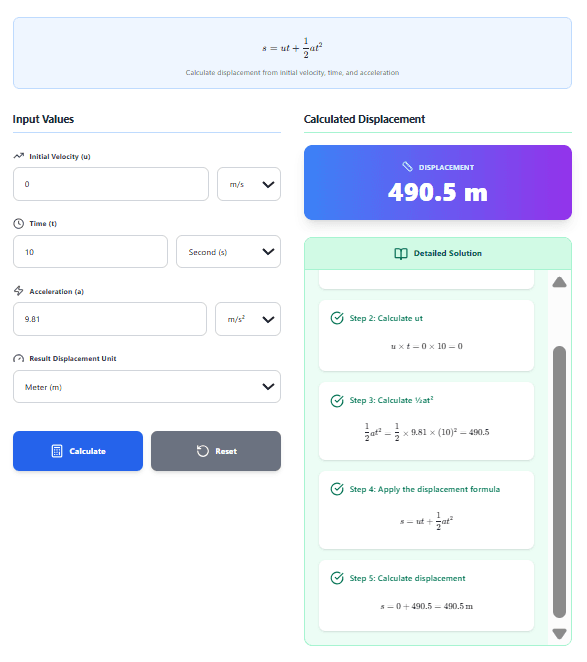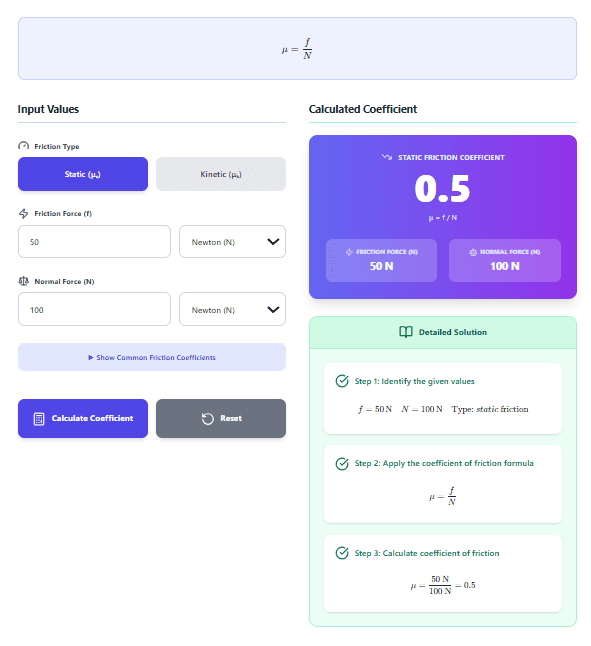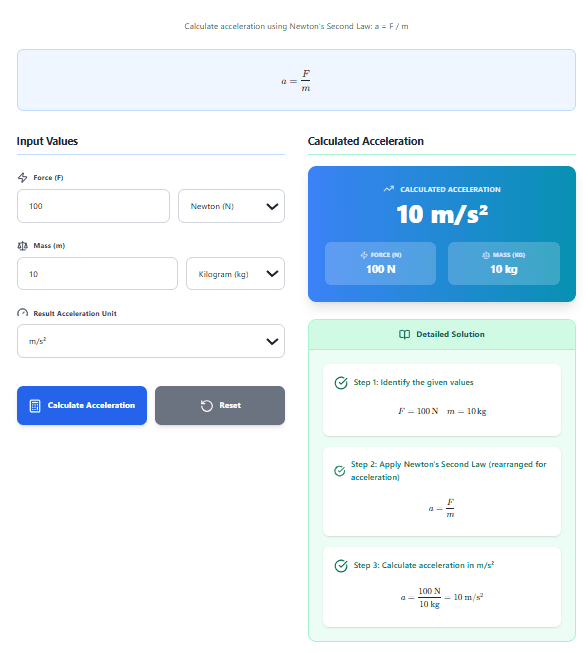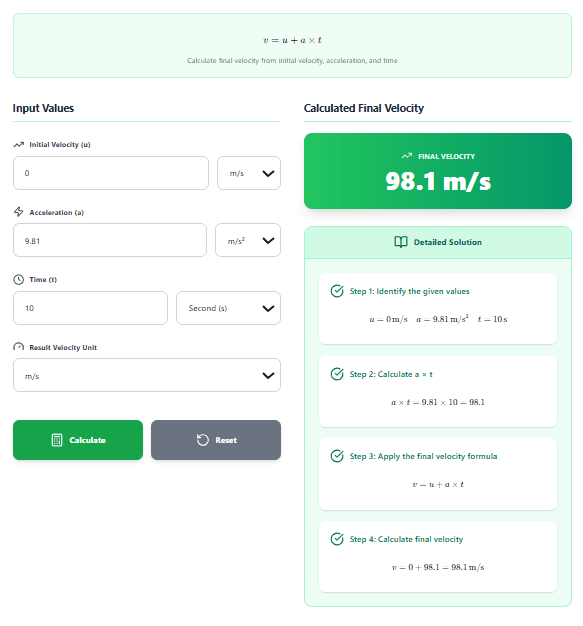
Force Calculator – Calculate F = m × a with Step-by-Step Solutions
Force is one of the most fundamental concepts in physics. It is what changes an object's motion — what accelerates a car, lifts a rocket, or stops a ball. Newton's Second Law captures this relationship in one simple equation: F = m × a, where F is force, m is mass, and a is acceleration.
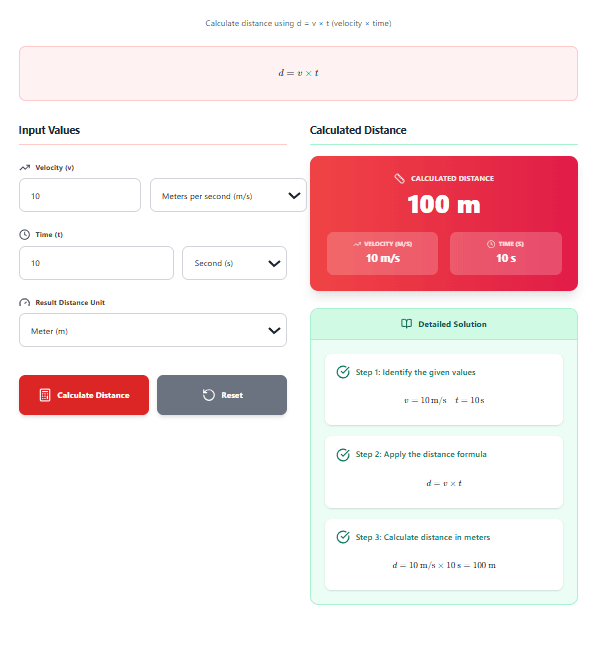
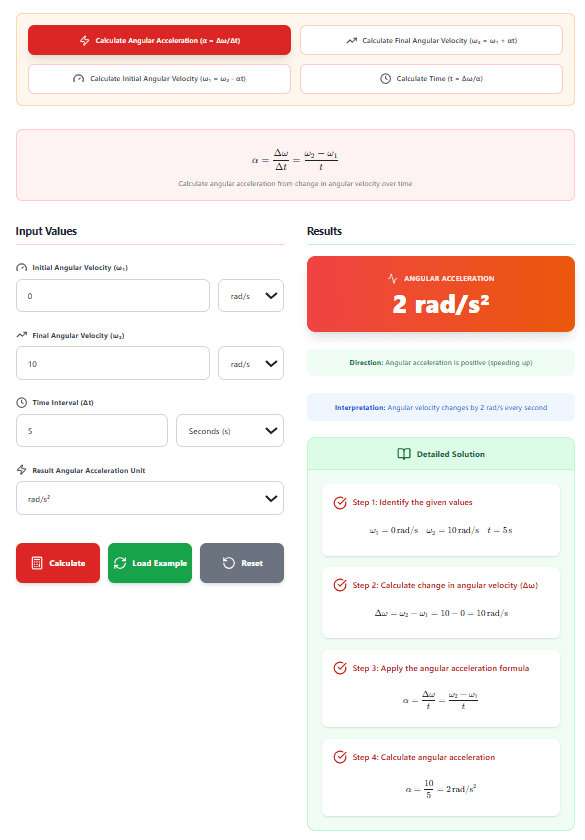
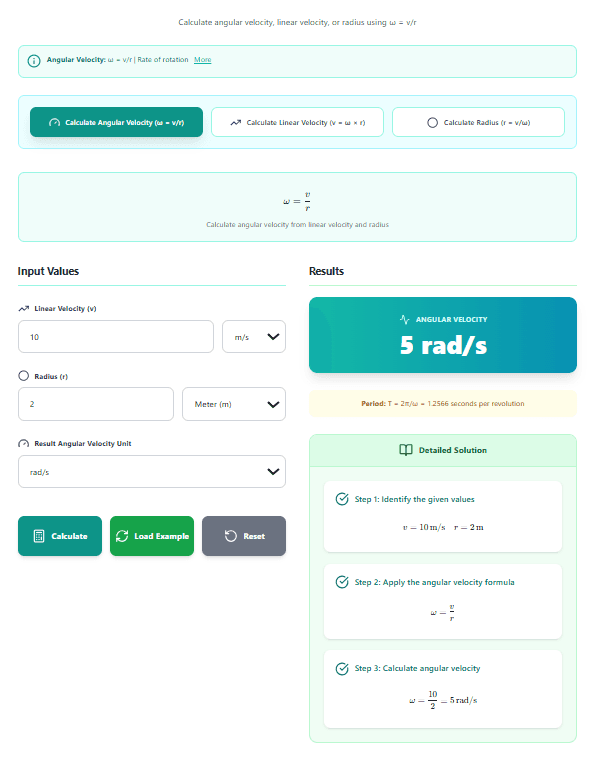
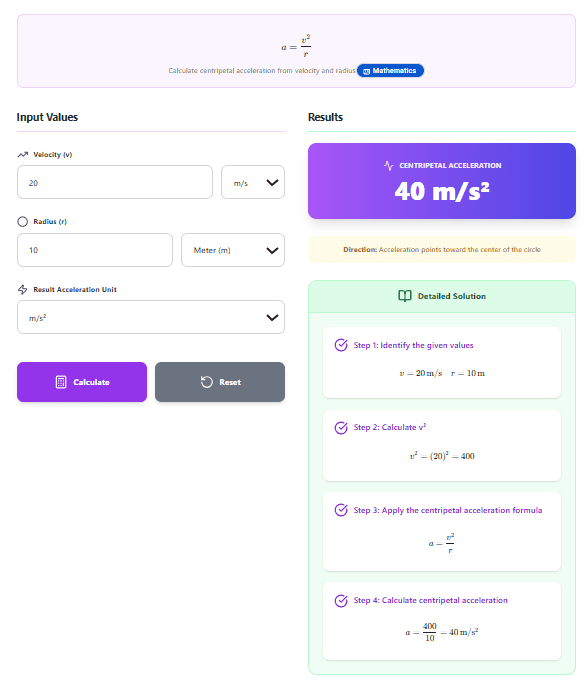
This calculator computes force from mass and acceleration, with support for multiple units including N, kN, dyn, and lbf, and step-by-step solutions.
Quick access: Use our free force calculator here
What Does This Calculator Do?
This tool calculates force using Newton's Second Law: F = m × a.
What you enter:
- Mass (m) with unit
- Acceleration (a) with unit
What you get:
- Force (F) in your preferred unit
- Mass converted to kg
- Acceleration converted to m/s²
- Step-by-step working
Negative acceleration is supported — enter a negative value for deceleration (braking, slowing down), and the calculator returns a negative force, indicating that it opposes the motion.
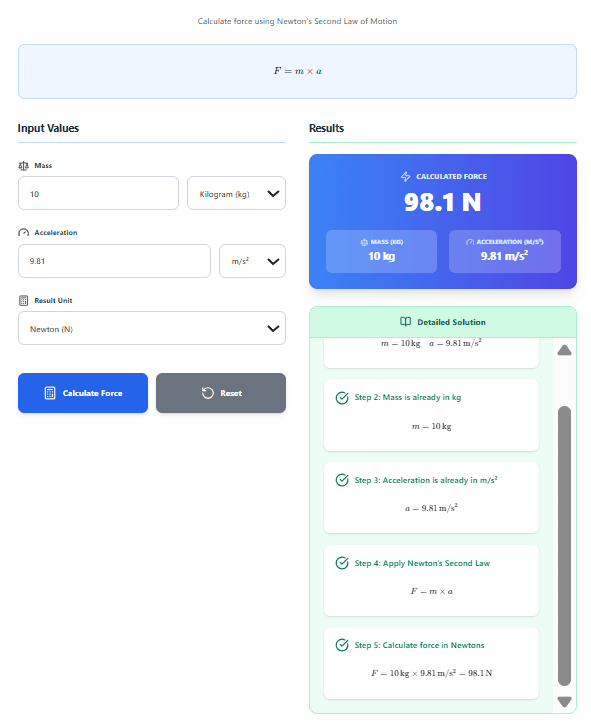
Here's a quick example:
A 10 kg object accelerates at 9.81 m/s²:
- Force: 98.1 N
- Mass: 10 kg
- Acceleration: 9.81 m/s²
The calculator shows you exactly how it got the answer, including any unit conversions needed.
Understanding Force
What Is Force?
Force is any interaction that, when unopposed, changes the motion of an object. It is a vector quantity — it has both magnitude and direction — and is measured in newtons (N) in the SI system. One newton is the force required to accelerate a 1 kg mass at 1 m/s².
Newton's Second Law
F = m × a
Where:
- F = Net force (N)
- m = Mass (kg)
- a = Acceleration (m/s²)
This is the most commonly used form of Newton's Second Law. It says that the net force on an object equals its mass times its acceleration. If you double the force, the acceleration doubles. If you double the mass, the acceleration halves.
Key Relationships
- More force → More acceleration (linear)
- More mass → Less acceleration (inversely proportional)
- Zero net force → Zero acceleration (constant velocity, or rest)
- Direction matters — force and acceleration are vectors
Newton's Three Laws of Motion
Force calculations appear in all three of Newton's laws:
- First law (inertia): An object at rest stays at rest, and an object in motion stays in motion at constant velocity, unless acted on by a net force. This is the special case of F = ma with F = 0.
- Second law (F = ma): The net force on an object equals its mass times its acceleration.
- Third law (action-reaction): For every action, there is an equal and opposite reaction. Forces always come in pairs.
Units of Force
| Unit | Symbol | Conversion to N |
|---|---|---|
| Newton (SI) | N | 1 |
| Kilonewton | kN | 1,000 |
| Dyne (CGS) | dyn | 1 × 10⁻⁵ |
| Pound-force (Imperial) | lbf | 4.44822 |
The newton is the standard unit in physics. The dyne is used in the CGS system (centimeter-gram-second). The pound-force is used in US customary and imperial engineering.
Common Force Values
| Situation | Approximate Force |
|---|---|
| Weight of an apple (100 g) | ~1 N |
| Weight of a book (1 kg) | ~9.8 N |
| Weight of a person (70 kg) | ~687 N |
| Force of a boxer's punch | ~2,000–4,000 N |
| Car engine thrust | ~5,000–10,000 N |
| Rocket thrust (Saturn V) | ~34 million N |
| Weight of an elephant (5,000 kg) | ~49,000 N |
Rearranged Formulas
| What to Find | Formula |
|---|---|
| Force | F = m × a |
| Mass | m = F/a |
| Acceleration | a = F/m |
Unit Support
This calculator handles a range of mass, acceleration, and force units:
Mass Units
| Unit | Symbol | Conversion to kg |
|---|---|---|
| Kilogram | kg | 1 |
| Gram | g | 0.001 |
| Milligram | mg | 1 × 10⁻⁶ |
| Pound | lb | 0.453592 |
Acceleration Units
| Unit | Symbol | Conversion to m/s² |
|---|---|---|
| Meters per second squared | m/s² | 1 |
| Centimeters per second squared | cm/s² | 0.01 |
| Feet per second squared | ft/s² | 0.3048 |
| Kilometers per hour squared | km/h² | 7.71605 × 10⁻⁵ |
Force Units
| Unit | Symbol | Conversion to N |
|---|---|---|
| Newton | N | 1 |
| Kilonewton | kN | 1,000 |
| Dyne | dyn | 1 × 10⁻⁵ |
| Pound-force | lbf | 4.44822 |
How to Use the Calculator
Step 1: Enter Mass
Enter the mass of the object and select its unit (kg, g, mg, or lb).
Step 2: Enter Acceleration
Enter the acceleration and select its unit (m/s², cm/s², ft/s², or km/h²). Negative values are supported for deceleration.
Step 3: Select Result Unit
Choose your preferred unit for the force — N, kN, dyn, or lbf.
Step 4: Calculate
Click "Calculate Force" and the result appears instantly with step-by-step working.
Step 5: Review the Solution
The calculator shows detailed steps, including any unit conversions and intermediate calculations.
Step-by-Step Examples
Example 1: Weight of an Object
Problem: What is the force (weight) of a 10 kg object near Earth's surface? (g = 9.81 m/s²)
Step 1: Identify the given values
- m = 10 kg
- a = 9.81 m/s²
Step 2: Apply the formula
- F = m × a
- F = 10 × 9.81
- F = 98.1 N
Result: The object's weight is 98.1 N.
Note: Weight is a specific case of force — it is the force of gravity on an object. Weight = mg, where g is the local gravitational acceleration.
Example 2: Car Acceleration
Problem: A 1,500 kg car accelerates at 3 m/s². What is the net force acting on it?
Step 1: Identify the given values
- m = 1,500 kg
- a = 3 m/s²
Step 2: Apply the formula
- F = 1,500 × 3
- F = 4,500 N = 4.5 kN
Result: The net force is 4,500 N (4.5 kN).
Example 3: Rocket Thrust
Problem: A model rocket with a mass of 0.5 kg accelerates at 50 m/s². What thrust does its engine produce?
Step 1: Identify the given values
- m = 0.5 kg
- a = 50 m/s²
Step 2: Apply the formula
- F = 0.5 × 50
- F = 25 N
Result: The engine produces 25 N of thrust.
Example 4: Force in Kilonewtons
Problem: What is the force required to accelerate a 2,000 kg car at 5 m/s², expressed in kilonewtons?
Step 1: Identify the given values
- m = 2,000 kg
- a = 5 m/s²
Step 2: Apply the formula
- F = 2,000 × 5 = 10,000 N
Step 3: Convert to kN
- F = 10,000 / 1,000 = 10 kN
Result: The force is 10 kN.
Example 5: Mixed Units
Problem: A 2 lb object accelerates at 5 m/s². What is the force in newtons?
Step 1: Convert mass to kilograms
- m = 2 lb × 0.453592 = 0.907 kg
Step 2: Apply the formula
- F = 0.907 × 5
- F ≈ 4.54 N
Result: The force is about 4.54 N.
Example 6: Acceleration in ft/s²
Problem: A 100 kg object accelerates at 32.2 ft/s² (approximately g in imperial units). What force acts on it?
Step 1: Convert acceleration to m/s²
- a = 32.2 × 0.3048 = 9.815 m/s²
Step 2: Apply the formula
- F = 100 × 9.815
- F ≈ 981.5 N
Result: The force is about 981.5 N — essentially the weight of a 100 kg object on Earth.
Example 7: Braking Force (Negative Acceleration)
Problem: A 1,500 kg car is braking and decelerates at 5 m/s². What is the braking force?
Step 1: Identify the given values
- m = 1,500 kg
- a = −5 m/s² (negative because it opposes motion)
Step 2: Apply the formula
- F = m × a
- F = 1,500 × (−5)
- F = −7,500 N
Result: The braking force is 7,500 N, directed opposite to the car's motion. The negative sign indicates direction, not a smaller force.
This is why the calculator supports negative acceleration: real-world deceleration problems — braking, drag, friction slowing an object — all involve a force that opposes motion.
Practical Implications
Force calculations drive real decisions across physics, engineering, and everyday life:
| Application | What force tells you |
|---|---|
| Structural engineering | Loads on beams, bridges, and buildings |
| Vehicle design | Engine thrust, braking force, tire grip |
| Rocket science | Thrust-to-weight ratio, escape velocity |
| Sports physics | Impact forces in boxing, football, golf |
| Biomechanics | Forces on joints, muscles, and bones |
| Machine design | Forces on gears, bearings, and actuators |
| Everyday estimation | Weight of objects, push/pull forces |
When to Use This Calculator
| What you know | What you can find | Formula |
|---|---|---|
| Mass and acceleration | Force | F = m × a |
| Force and acceleration | Mass | m = F/a |
| Force and mass | Acceleration | a = F/m |
The calculator on this page handles the first case. The other two are simple rearrangements — useful when your known quantities are different.
Common Questions About Force
Q: What is force?
Force is any interaction that changes or tends to change the motion of an object. It is a vector quantity, measured in newtons (N), and defined by Newton's Second Law as F = m × a.
Q: What is a newton?
A newton (N) is the SI unit of force. One newton is the force required to accelerate a 1 kg mass at 1 m/s². In base SI units, 1 N = 1 kg·m/s².
Q: What is the difference between mass and weight?
Mass is a measure of how much matter an object contains (kg). Weight is the force of gravity on that mass (N). On Earth, weight = mass × 9.81 m/s². On the Moon, the same object has the same mass but about 1/6 the weight.
Q: What is the difference between force and pressure?
Force is a push or pull (N). Pressure is force per unit area (N/m² = Pa). The same force applied over a smaller area produces higher pressure — that is why a sharp knife cuts better than a dull one.
Q: Does the direction of force matter?
Yes. Force is a vector — it has both magnitude and direction. The net force is the vector sum of all forces on an object. If two equal forces act in opposite directions, they cancel.
Q: What happens if the net force is zero?
The object's acceleration is zero. If it was at rest, it stays at rest. If it was moving, it continues at constant velocity. This is Newton's First Law, and it is the special case of F = ma with F = 0.
Q: Can force be negative?
Yes. The sign of a force indicates its direction relative to a chosen axis. A negative force means the force points in the opposite direction to the positive axis.
Q: Can I use negative acceleration (deceleration)?
Yes. Enter a negative value in the acceleration field. The resulting force will be negative, indicating that it opposes the motion. This is useful for braking problems, drag analysis, and any scenario where an object is slowing down.
Q: What are common force magnitudes in everyday life?
- Weight of an apple: ~1 N
- Weight of a book: ~10 N
- Weight of a person: ~700 N
- Boxer's punch: ~2,000–4,000 N
- Car engine thrust: ~5,000–10,000 N
- Rocket thrust (Saturn V): ~34 million N
Q: How do I convert between newtons and pounds-force?
1 N ≈ 0.2248 lbf, and 1 lbf ≈ 4.44822 N. To convert N to lbf, divide by 4.44822. To convert lbf to N, multiply by 4.44822.
Q: What real-world applications use force calculations?
- Structural engineering (loads on beams, bridges, buildings)
- Automotive design (engine thrust, braking, tire grip)
- Aerospace (thrust, drag, lift)
- Sports physics (impact forces)
- Biomechanics (forces on joints and muscles)
- Machine design (gears, bearings, actuators)
Tips for Getting the Best Results
Match the units correctly. Mass in kg (or g, mg, lb), acceleration in m/s² (or cm/s², ft/s², km/h²). The calculator converts everything internally, but understanding the unit relationships helps catch mistakes.
Use standard gravity for weight problems. When calculating the weight of an object near Earth's surface, use a = g = 9.81 m/s².
Use negative acceleration for braking problems. Enter a negative value for deceleration. The resulting force will be negative, indicating it opposes motion. This works for braking, drag, and any slowing-down scenario.
Check the magnitude. A force in the millions of newtons is enormous (rocket scale); a force in fractions of a newton is tiny (small electronic components). If your result seems off, double-check the units.
Remember: force is a vector. In one-dimensional problems, the sign tells you the direction. In two- or three-dimensional problems, you need to break the force into components.
Use the rearranged forms when needed. If you know force and acceleration, you can find mass (m = F/a). If you know force and mass, you can find acceleration (a = F/m).
Double-check your inputs. A single digit error changes everything. Take a moment to verify each number.
Review the steps. The step-by-step solution helps you understand the process and verify the calculation.
Final Thoughts
Force is the central concept in classical mechanics, and Newton's Second Law — F = m × a — is the equation that ties everything together. It says that motion changes when a net force acts, and the amount of change depends on both the force and the object's mass. This single relationship describes everything from a falling apple to a rocket launch.
The formula is simple, but its implications are enormous. It explains why heavy objects are harder to push, why rockets need enormous thrust, and why a small force over a long time can produce the same change in motion as a large force over a short time. It is the foundation of engineering mechanics, biomechanics, and spaceflight.
This calculator handles the direct form of Newton's Second Law, with support for mass in kg, g, mg, and lb; acceleration in m/s², cm/s², ft/s², and km/h² (including negative values for deceleration); and force in N, kN, dyn, and lbf. The output includes the converted mass, converted acceleration, and step-by-step working.
Whether you are solving a homework problem, designing a machine, or estimating the weight of an object, this tool can save time and reduce mistakes by handling the math and unit conversions automatically.