🧬 The Ultimate Guide to Macronutrient Mastery: Fueling Your Body for Peak Performance
💡 Introduction: Why Macros Matter More Than Calories
For decades, conventional dieting focused solely on one metric: calories. While the principle of 'Calories In vs. Calories Out' (CICO) remains the foundation of weight management, it completely ignores the quality of those calories. This is where macronutrients--Protein, Carbohydrates, and Fats--become the real difference-maker. Macros dictate your energy levels, muscle mass, hormones, and even how satisfied you feel after meals.
This ultimate guide dives deep into the science and practical application of macro counting, giving you a step-by-step framework to build an effective and sustainable diet. By the end, you’ll know exactly how to calculate your caloric needs, choose the ideal macro split for your goals, and implement a foolproof tracking system.
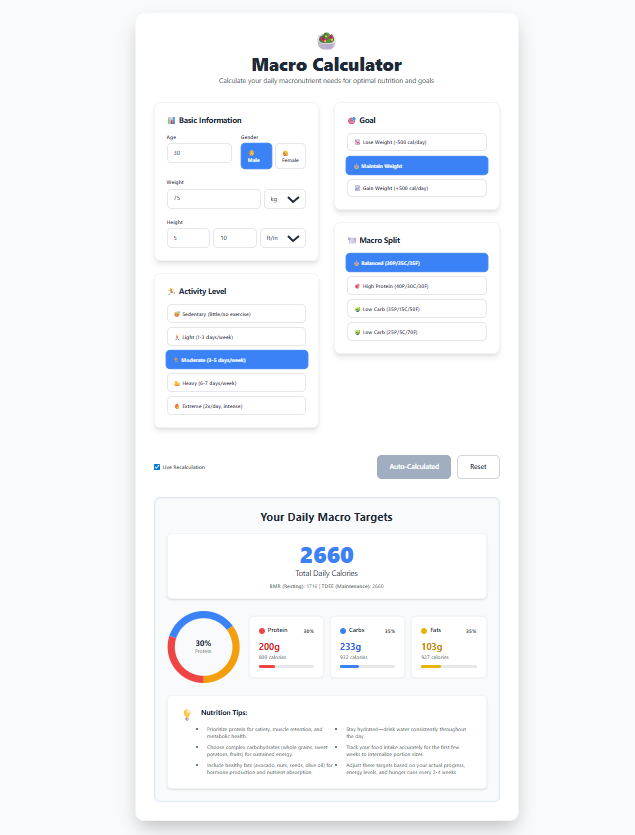
👉 Shortcut: Use the advanced Solvezi Macro Calculator to get your personalized macro targets in under 60 seconds.
--
📖 Table of Contents
- Understanding the Fundamentals: What Are Macros?
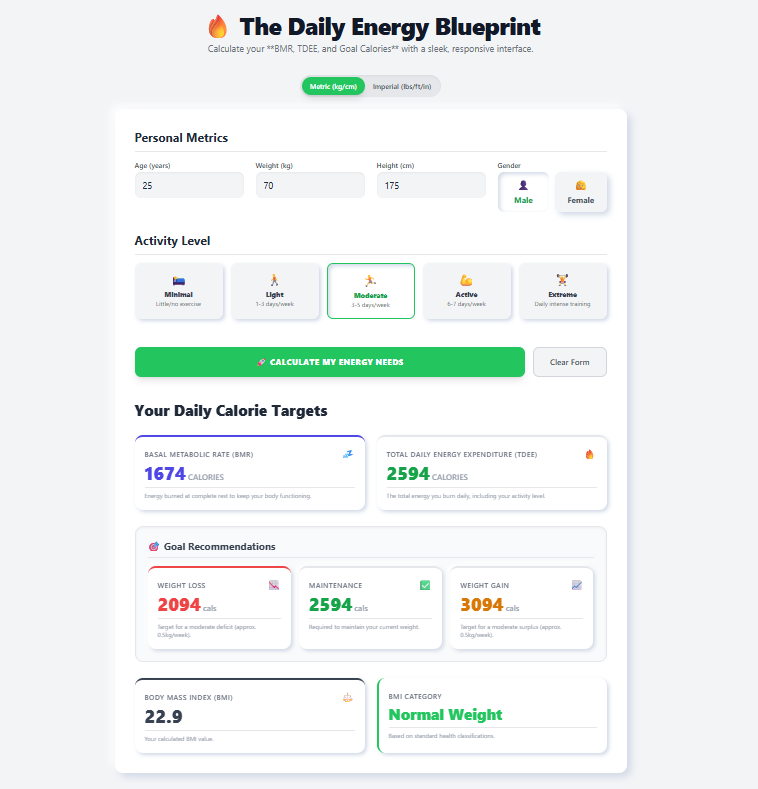
- The Science of Caloric Needs: BMR, TDEE, and the Mifflin-St Jeor Equation
- Step-by-Step: How to Calculate Your Target Macros
- Choosing Your Macro Split: Balanced, Keto, High-Protein, and More
- Mastering the Art of Tracking (The Practical Steps)
- Common Macro Counting Mistakes (and How to Fix Them)
- FAQs: Your Top Macro Questions Answered
--
1. Understanding the Fundamentals: What Are Macros?
Macronutrients (macros) are nutrients the body needs in large amounts to provide energy and maintain function. There are three key macros, each playing a vital role in your health and physique.
| Macronutrient | Primary Function | Caloric Density | Why It’s Crucial |
|---|---|---|---|
| Protein (P) | Builds and repairs muscle, tissues, enzymes, and hormones. | 4 cal/g | Preserves muscle, increases satiety, and boosts metabolism. |
| Carbohydrates (C) | Main energy source for the brain and muscles. | 4 cal/g | Fuels workouts and supports cognitive function. |
| Fats (F) | Supports hormone production and nutrient absorption. | 9 cal/g | Provides long-term energy and supports cellular health. |
Why Grams Matter More Than Calories
Tracking grams of each macro ensures that your calories come from the right mix of nutrients. Two people may both eat 2,000 calories, but one may build muscle while the other gains fat--based entirely on macro composition.
--
2. The Science of Caloric Needs: BMR, TDEE, and the Mifflin-St Jeor Equation
Before calculating macros, you must know your total daily energy requirement. This involves two key steps:
a. Basal Metabolic Rate (BMR)
Your BMR represents the calories burned at rest for essential body functions.
- Men:
BMR = (10 × W_kg) + (6.25 × H_cm) - (5 × A) + 5 - Women:
BMR = (10 × W_kg) + (6.25 × H_cm) - (5 × A) - 161
Where:
- W_kg = weight (kg)
- H_cm = height (cm)
- A = age (years)
b. Total Daily Energy Expenditure (TDEE)
Your TDEE = BMR × Activity Factor.
| Activity Level | Multiplier | Description |
|---|---|---|
| Sedentary | 1.2 | Little or no exercise, desk job. |
| Lightly Active | 1.375 | Light exercise 1–3 days/week. |
| Moderately Active | 1.55 | Exercise 3–5 days/week. |
| Very Active | 1.725 | Hard exercise 6–7 days/week. |
| Extremely Active | 1.9 | Intense daily training or physical job. |
💡 Tip: Be honest about your activity level--most people overestimate it.
--
3. Step-by-Step: How to Calculate Your Target Macros
Step 1: Adjust TDEE for Your Goal
- Weight Loss: TDEE − 500 kcal/day → ~0.45 kg (1 lb) loss per week. (Safety floors: 1200 kcal women, 1500 kcal men)
- Maintenance: TDEE (no adjustment).
- Weight Gain: TDEE + 300–500 kcal/day for gradual muscle growth.
Step 2: Prioritize Protein
Set protein based on body weight:
- 1.8–2.2 g/kg (0.8–1 g/lb) → supports muscle maintenance and satiety.
Step 3: Distribute Remaining Calories Between Carbs & Fats
After protein calories are set, divide remaining calories based on your chosen macro split.
--
4. Choosing Your Macro Split: Balanced, Keto, High-Protein, and More
| Split Type | Protein (%) | Carbs (%) | Fats (%) | Best For |
|---|---|---|---|---|
| Balanced | 30 | 40 | 30 | General fitness & easy adherence. |
| High-Protein | 40 | 30 | 30 | Fat loss & muscle retention. |
| Low-Carb/Paleo | 35 | 25 | 40 | Insulin-sensitive individuals. |
| Ketogenic (Keto) | 25 | 5 | 70 | Nutritional ketosis (Carbs <50g). |
| Endurance Athlete | 20 | 55 | 25 | Long-duration training recovery. |
Example (2000 Calories, 30/40/30 Split)
- Protein: 600 kcal / 4 = 150 g
- Carbs: 800 kcal / 4 = 200 g
- Fats: 600 kcal / 9 = 67 g
✅ Daily Target: 150g P / 200g C / 67g F
--
5. Mastering the Art of Tracking
Accurate tracking turns data into results.
Essential Tools:
- MyFitnessPal or Cronometer (for logging)
- Digital food scale
- Measuring cups/spoons
Best Practices:
- Log meals before eating.
- Weigh food raw when possible.
- Track oils, sauces, and condiments.
- Plan meals around protein first.
--
6. Common Macro Counting Mistakes (and Fixes)
❌ 1. Ignoring Changes in TDEE
Fix: Recalculate every 4–6 weeks or after ~5–7 kg weight change.
❌ 2. Eating Too Little Fat
Fix: Keep at least 0.5g of fat per kg of body weight.
❌ 3. Underestimating Restaurant Calories
Fix: Overestimate meals by 20% when unsure.
--
7. FAQs
Q: How precise should I be?
A: ±5g for protein, ±10g for carbs/fats is excellent.
Q: Why is protein so high?
A: It maximizes muscle retention and satiety while boosting calorie burn.
Q: I’m not losing weight--why?
A: Tracking errors. Recheck measurements and reduce calories slightly if needed.
Q: Can I trade macros?
A: Only between carbs and fats--keep protein and minimum fat intact.
--
🚀 Conclusion: Take Control of Your Nutrition
Macro tracking is the blueprint for precision nutrition. It transforms guesswork into measurable progress--empowering you to reach your body goals efficiently.
Start mastering your nutrition today with the Solvezi Macro Calculator and discover how targeted macros can revolutionize your fitness journey.
--
Tags: bmr, tdee, macro split, protein, carbs, fats, keto, high-protein, fitness, nutrition, weight loss, muscle gain, health calculator